
PocketAnatomy® is a registered brand name owned by © eMedia Interactive Ltd, 2009-2027.
iPhone, iPad, iPad Pro and Mac are trademarks of Apple Inc., registered in the U.S. and other countries. App Store is a service mark of Apple Inc.
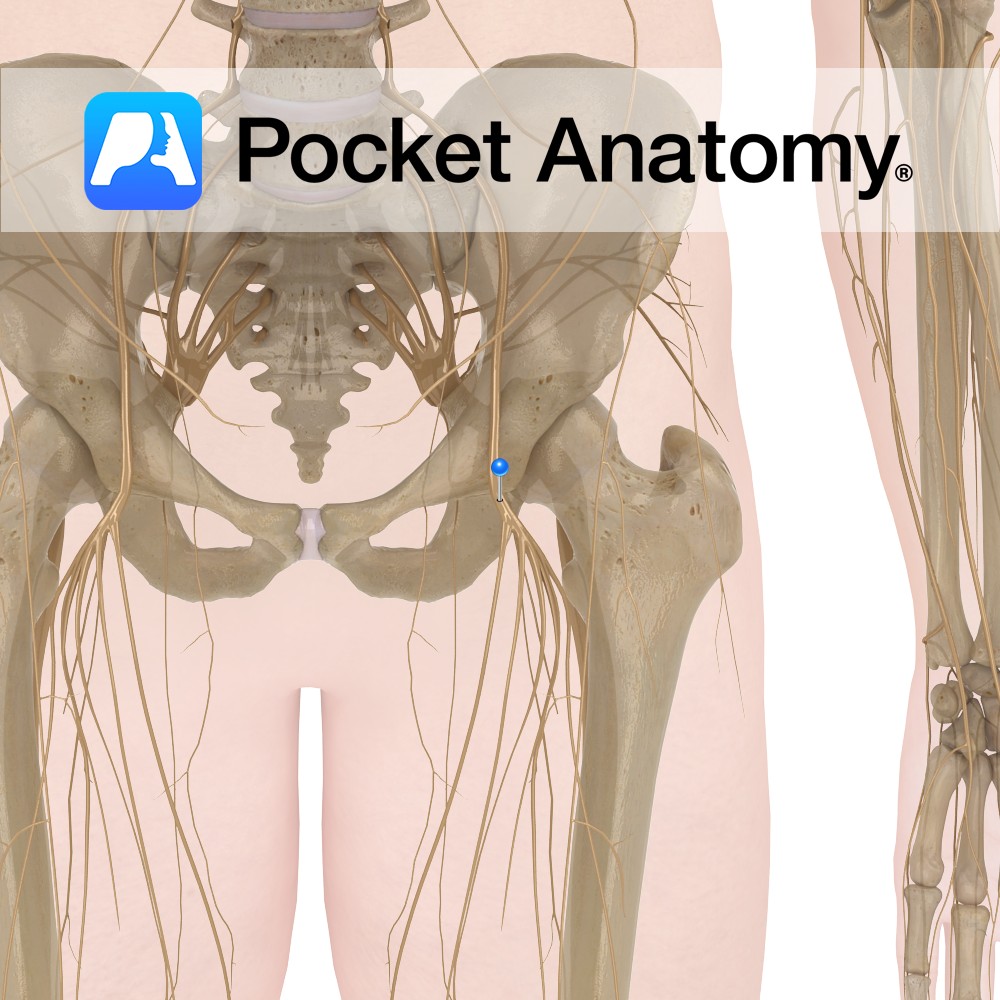
Anatomy Course The largest branch of the lumbar plexus and is composed of the second, third and fourth lumbar nerves. Descends between the iliacus muscle and psoas major muscle and runs below the inguinal ligament where it divides into two branches, anterior and posterior. Supply Motor supply to the quadriceps femoris as well as many
- Published in Pocket Anatomy Pins
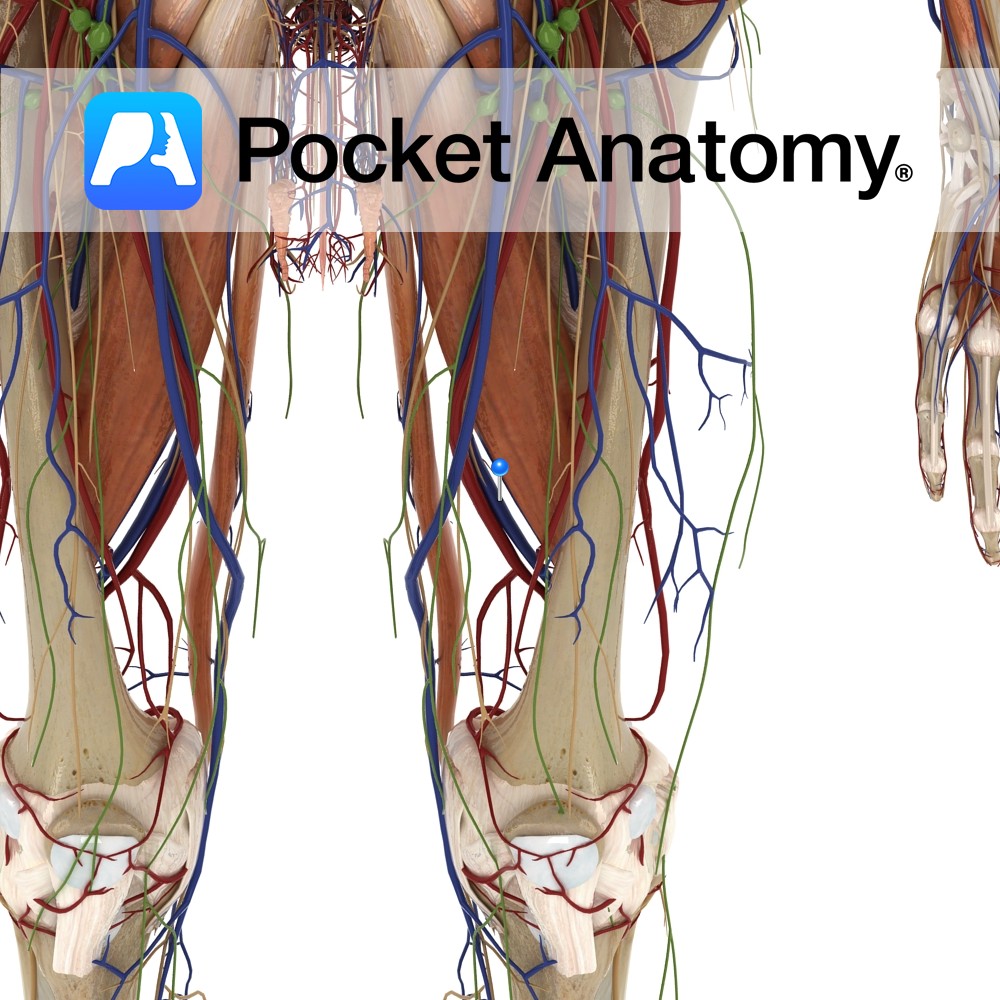
Anatomy Course Continuation of the popliteal artery when it enters the adductor canal. It travels along with its associated artery in the femoral sheath until it passes beneath the inguinal ligament, where it becomes the external iliac vein. Drain Drains the lower limb. Clinical Common site for injection of recreational drugs. Interested in taking our
- Published in Pocket Anatomy Pins
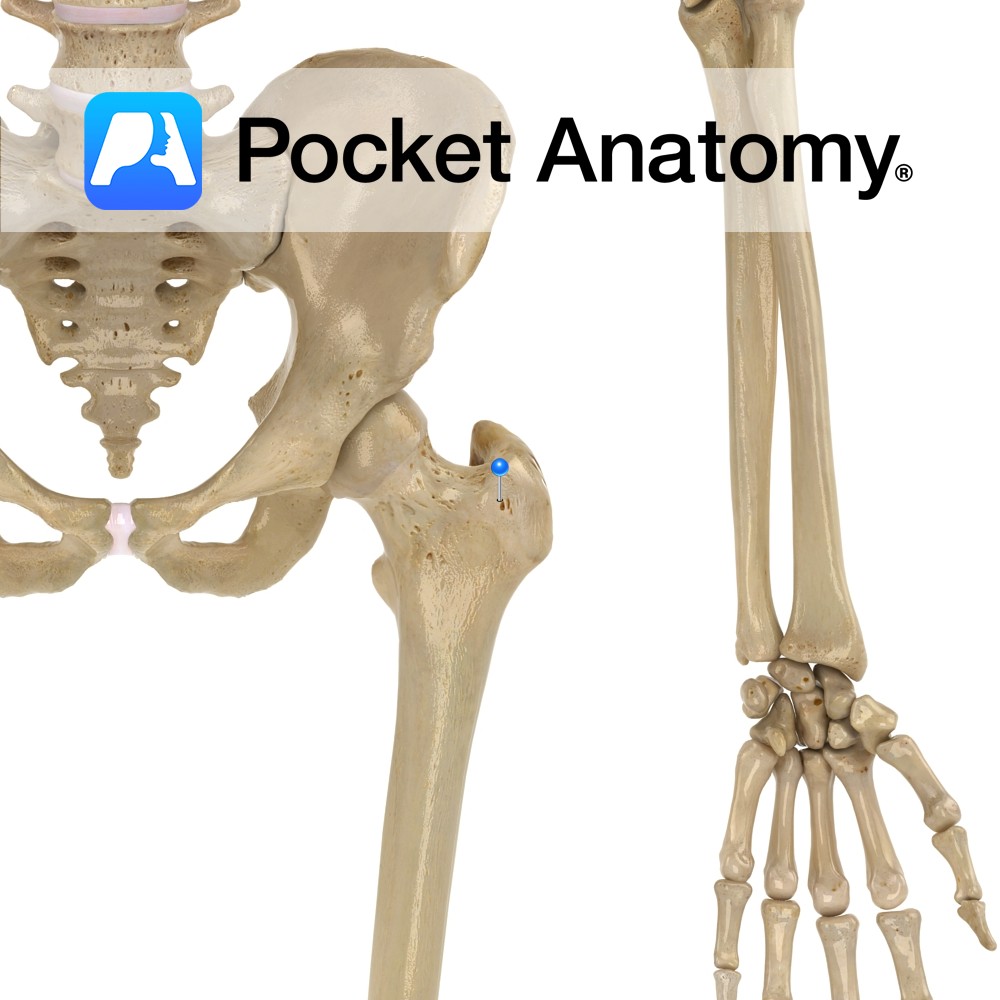
Anatomy Large bulge back and out from junction neck and shaft, main attachment of many muscles involved in complex hip movement (including rotation) manifested eg as postural gait; including vastus lateralis, obturator internus/externus, superior/inferior gemellus, piriformis, gluteus medius/minimus. The greater and lesser trochanters bulge out from top of femur and give leverage to muscles that
- Published in Pocket Anatomy Pins
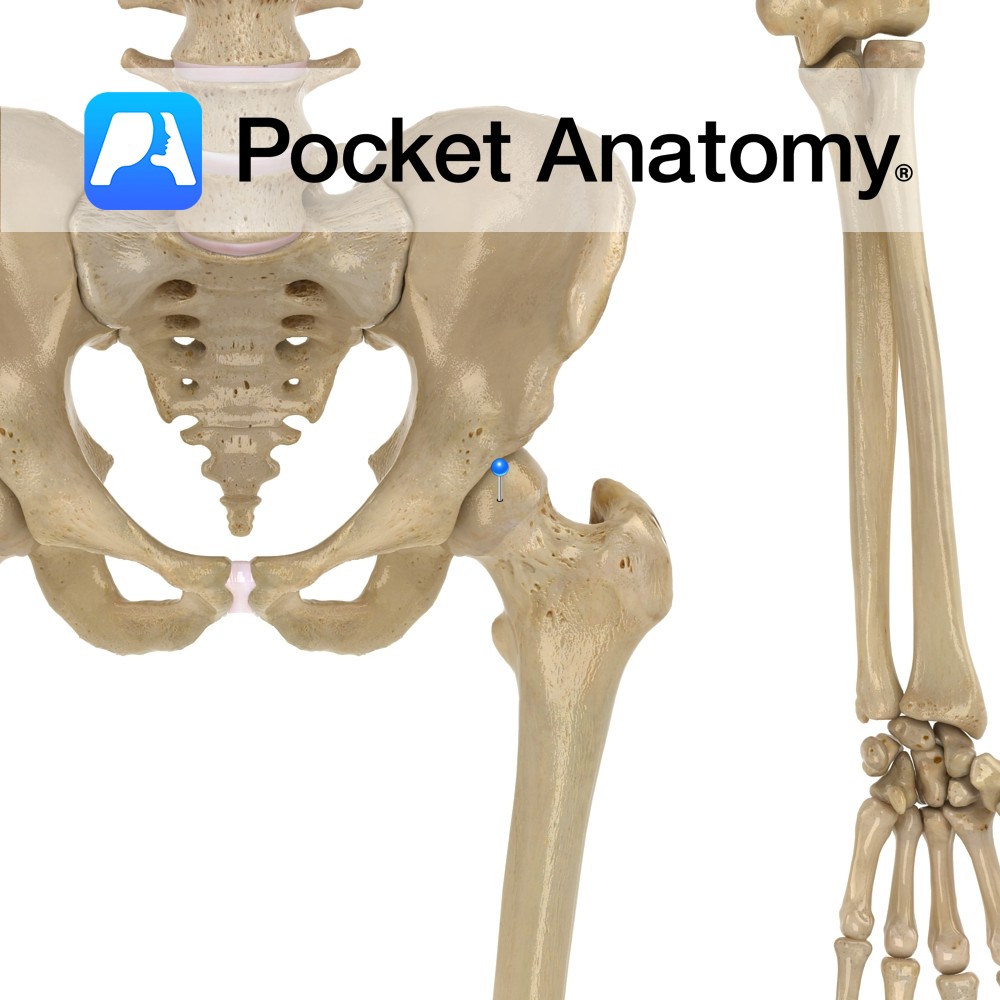
Anatomy Most superior/proximal part femur, the ball of the ball-and-socket hip joint (acetabulum the socket), connected by neck to shaft, globular, points up in and forward, coated with cartilage (other than fovea which gives attachment to ligament of head of femur). Clinical Fracture of femoral head is usually due to significant (high force) trauma, and
- Published in Pocket Anatomy Pins

Anatomy Oblong eminence at lateral/outer aspect of lower femur, separated in the front from medial condyle by trochlear groove, at back by intercondyloid fossa. Articulates at front with patella, bottom and back with tibia. Interested in taking our award-winning Pocket Anatomy app for a test drive?
- Published in Pocket Anatomy Pins
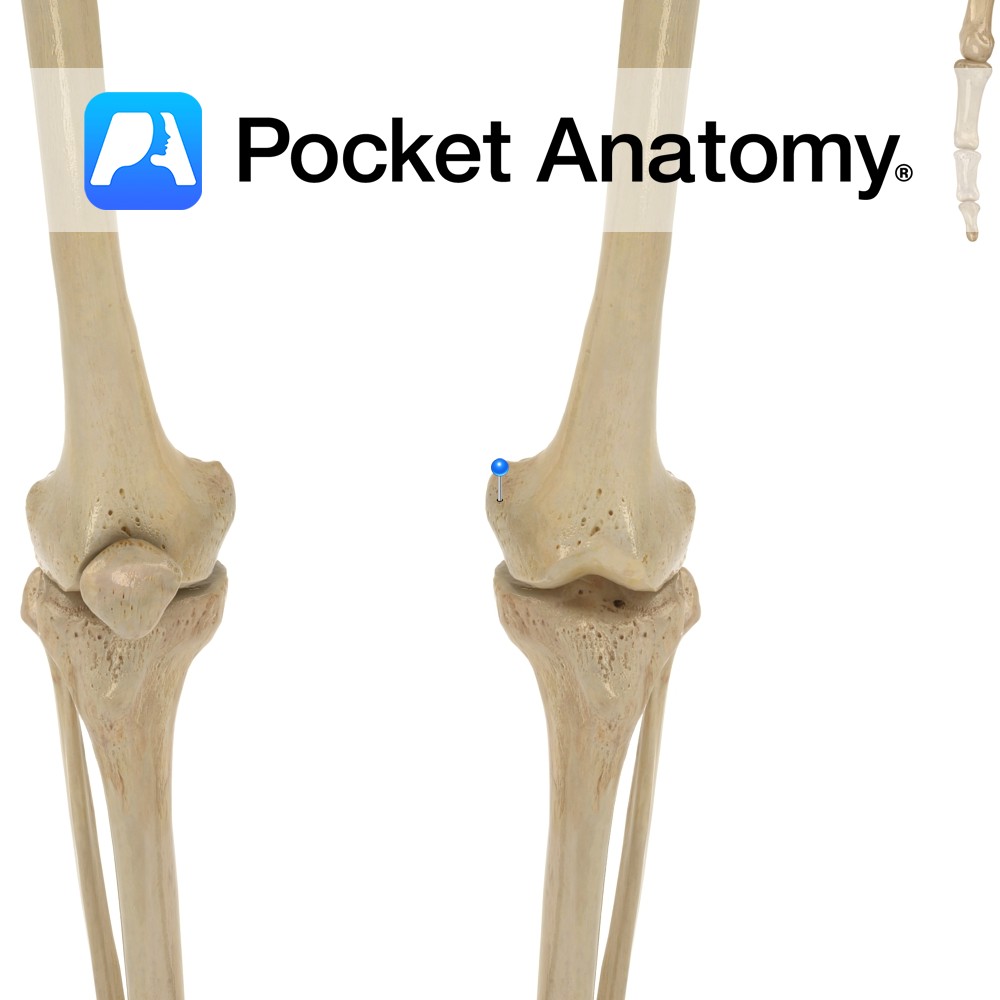
Anatomy Convex bump at inner/medial aspect of lower femur (bigger, more prominent than lateral epicondyle). Attachments; tibial (medial) collateral ligament (MCL), which connects to lateral condyle tibia, medial head of gastrocnemius behind. Interested in taking our award-winning Pocket Anatomy app for a test drive?
- Published in Pocket Anatomy Pins
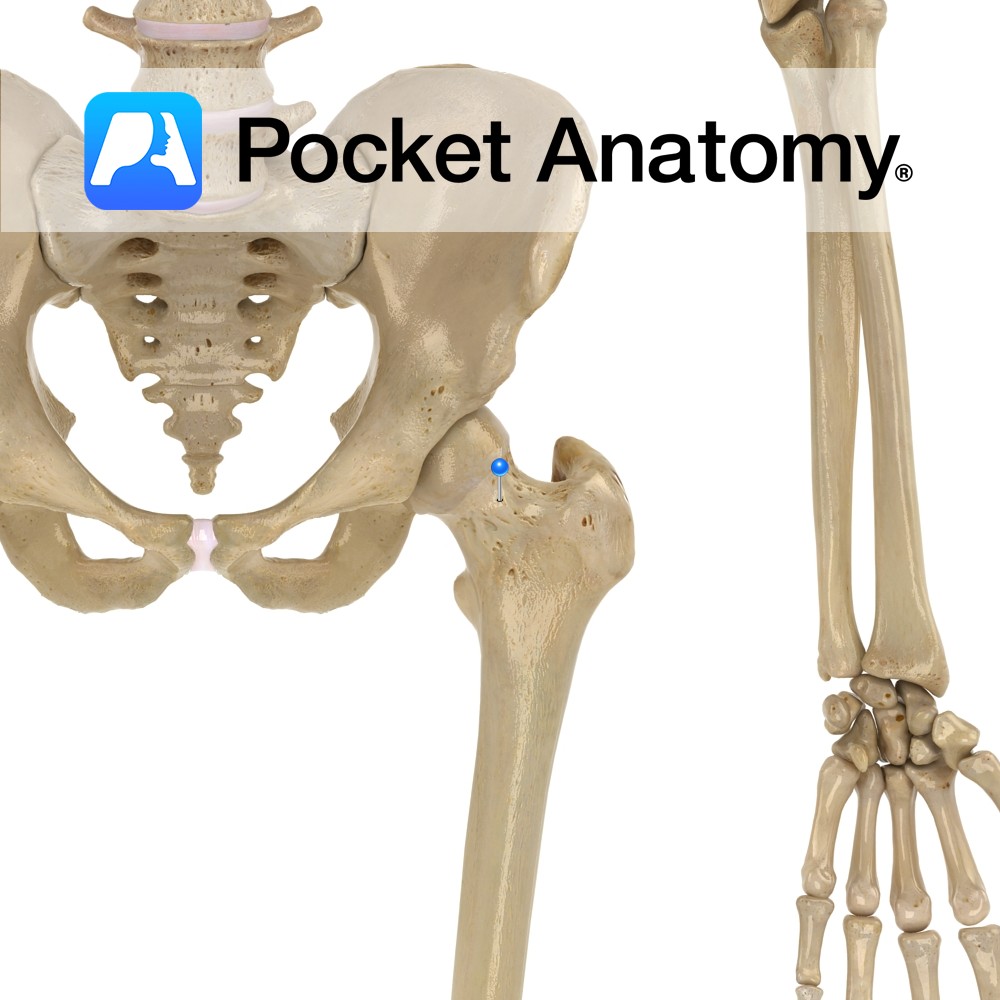
Anatomy Angle of 125° with shaft in adulthood; angle less in shorter femurs and wider pelvises (sa female). Points up, in and forward (12 – 14°). Big load-bearing and torsion associated with locomotion, are withstood by relatively small neck bone mass, through its tension and compression trabeculae and strong calcar femorale. Clinical Classicly presents as:
- Published in Pocket Anatomy Pins
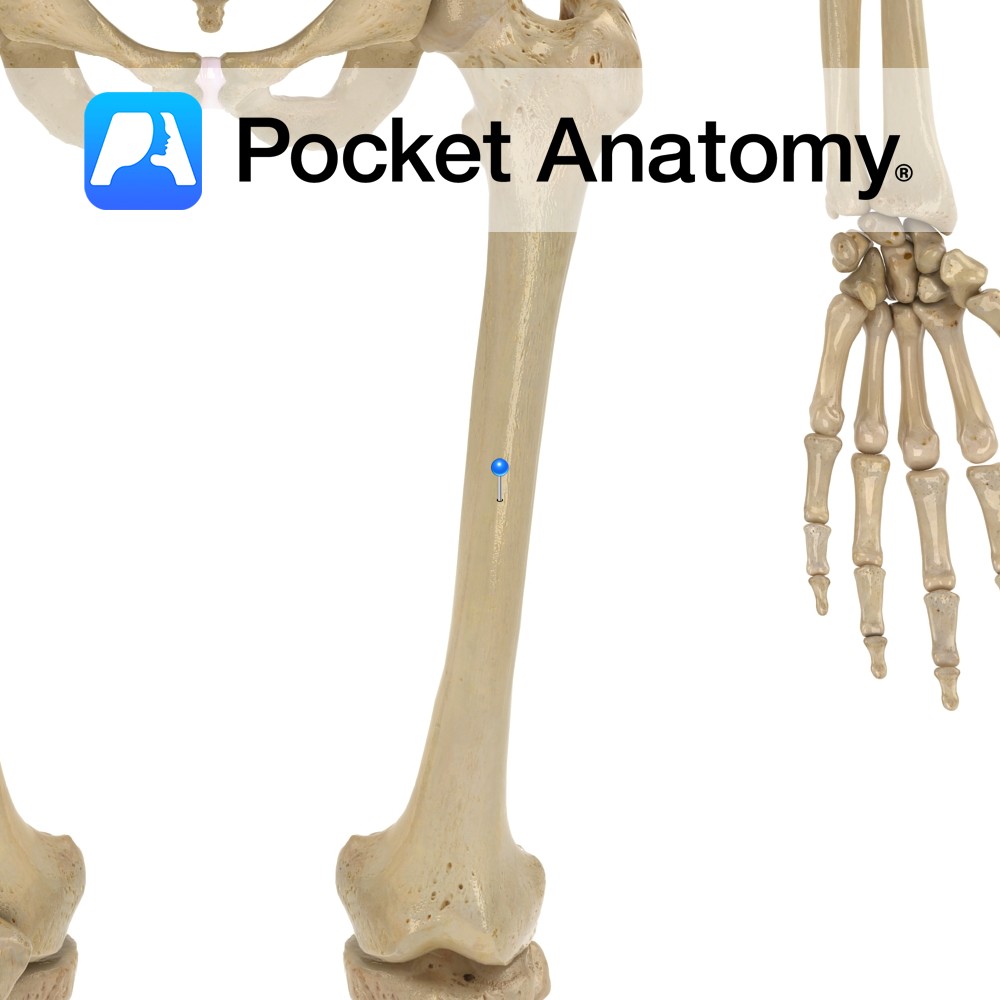
Anatomy Cylindrical, courses down and in (hips are further apart than knees, more so in female). Clinical Shaft is very strong, surrounded by large richly perfused muscles. Takes a lot of force to fracture (spiral, comminuted or open). Displacement of fragments usual (muscles pull); surgery required. Life-threatening blood loss can occur in open fracture; significant
- Published in Pocket Anatomy Pins
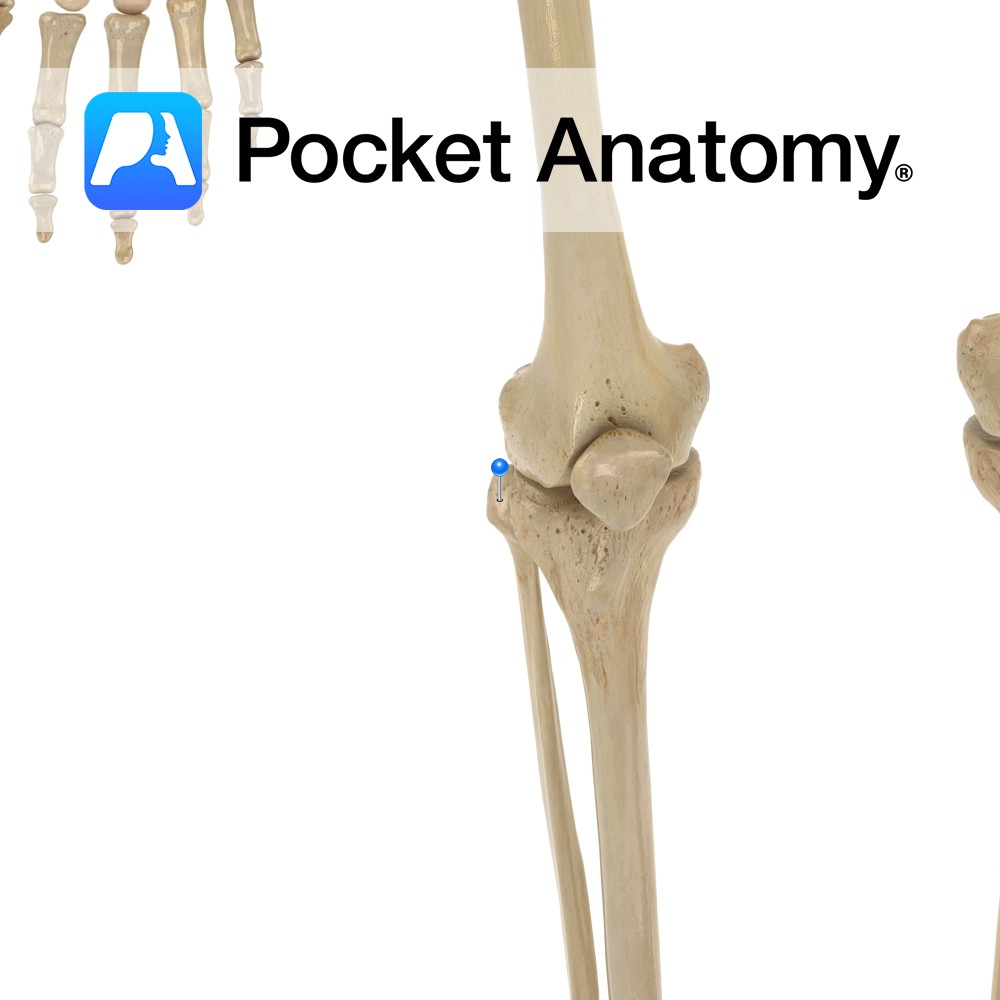
Anatomy Small, quadrate, lower and more posterior than lateral condyle tibia. Connected to lateral condyles of femur (by fibular – also known as lateral – collateral ligament) and tibia (proximal tibiofibular joint and anterior and posterior ligaments). Clinical Lateral collateral ligament (LCL) injury less common than medial, as force required on inside of knee (to
- Published in Pocket Anatomy Pins
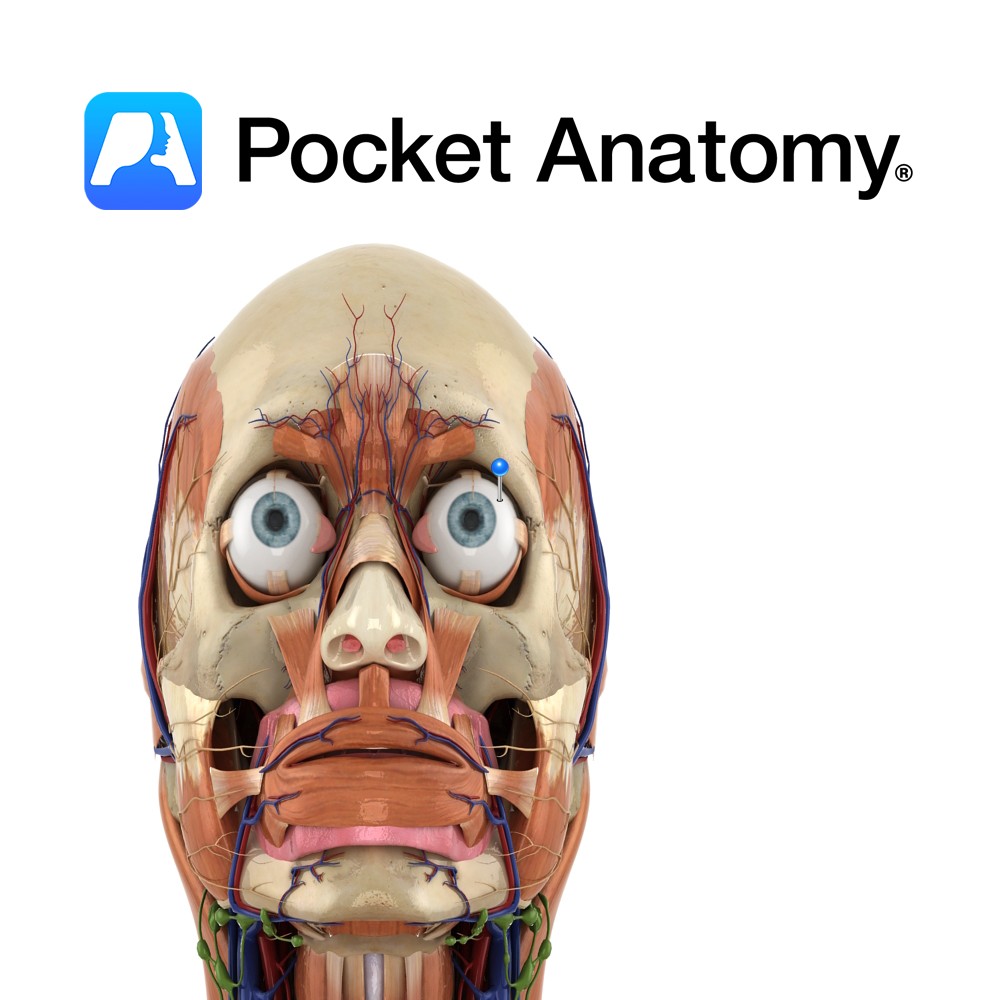
Anatomy The human eyes are the organs of vision, located in the bony orbits in the front of the skull, on either side of the bridge of the nose. Functions The eye detects light and transforms it into impulses that are sent to the brain. Light enters through an opening in the iris called the
- Published in Pocket Anatomy Pins