
PocketAnatomy® is a registered brand name owned by © eMedia Interactive Ltd, 2009-2027.
iPhone, iPad, iPad Pro and Mac are trademarks of Apple Inc., registered in the U.S. and other countries. App Store is a service mark of Apple Inc.
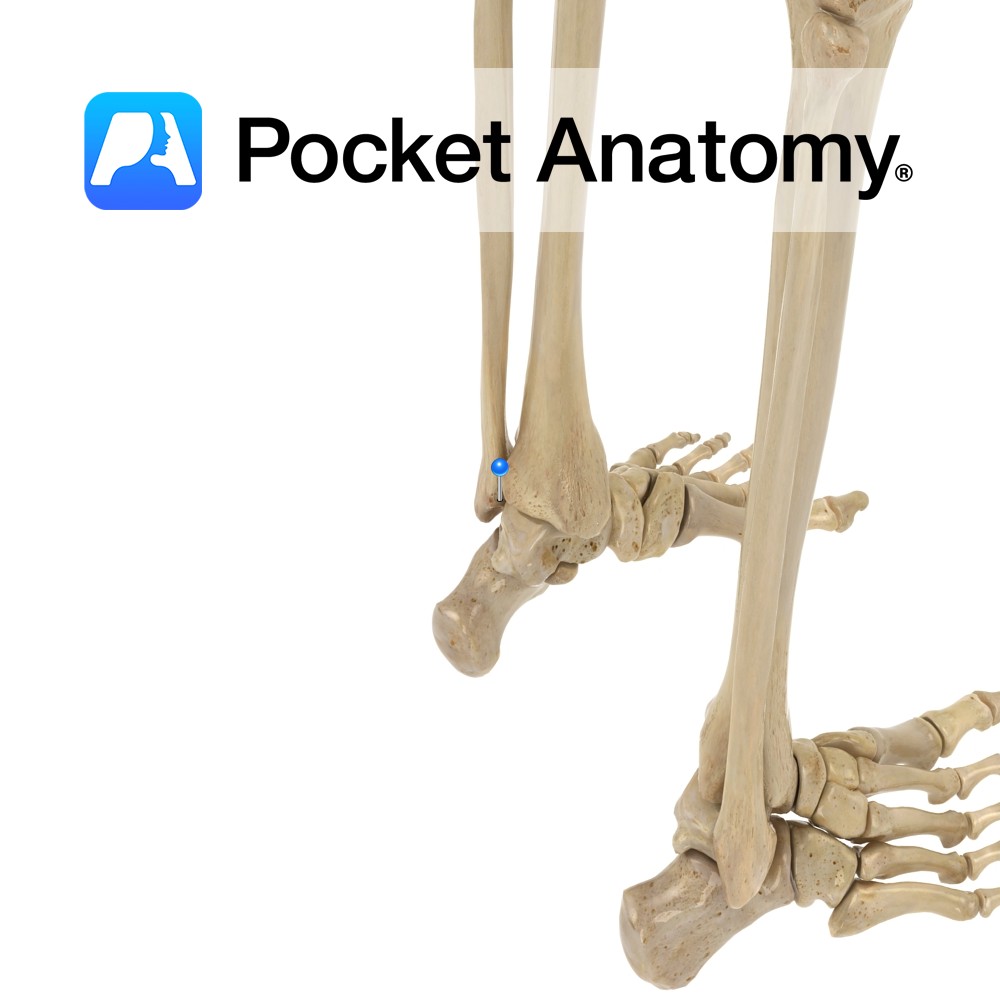
Anatomy Pyramidal lower extremity of fibula, runs down lateral to and articulates (medially/in) with the talus, behind and in front of which joint there are posterior and anterior talofibular ligaments, and below which, from the point/summit is the calcaneofibular ligament (down and slightly back). The visible outer knob of the ankle. Clinical Ankle injuries most
- Published in Pocket Anatomy Pins
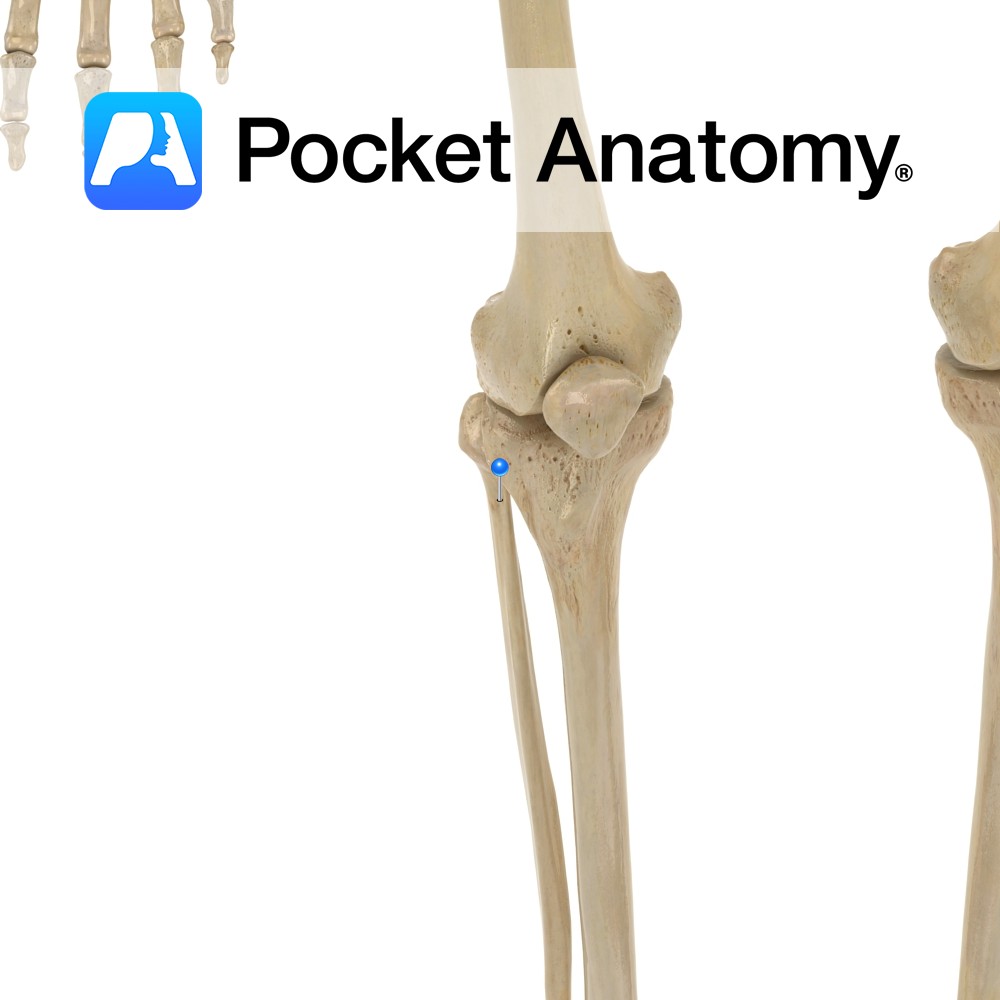
Anatomy Slight narrowing between head and shaft, over which the peroneal nerve runs. Clinical Peroneal nerve can be felt and rolled, cord-like, to produce tingling in leg and foot. Damage to peroneal nerve can lead to foot drop; the foot drags during walking, as dorsiflexion is impaired. Interested in taking our award-winning Pocket Anatomy app
- Published in Pocket Anatomy Pins
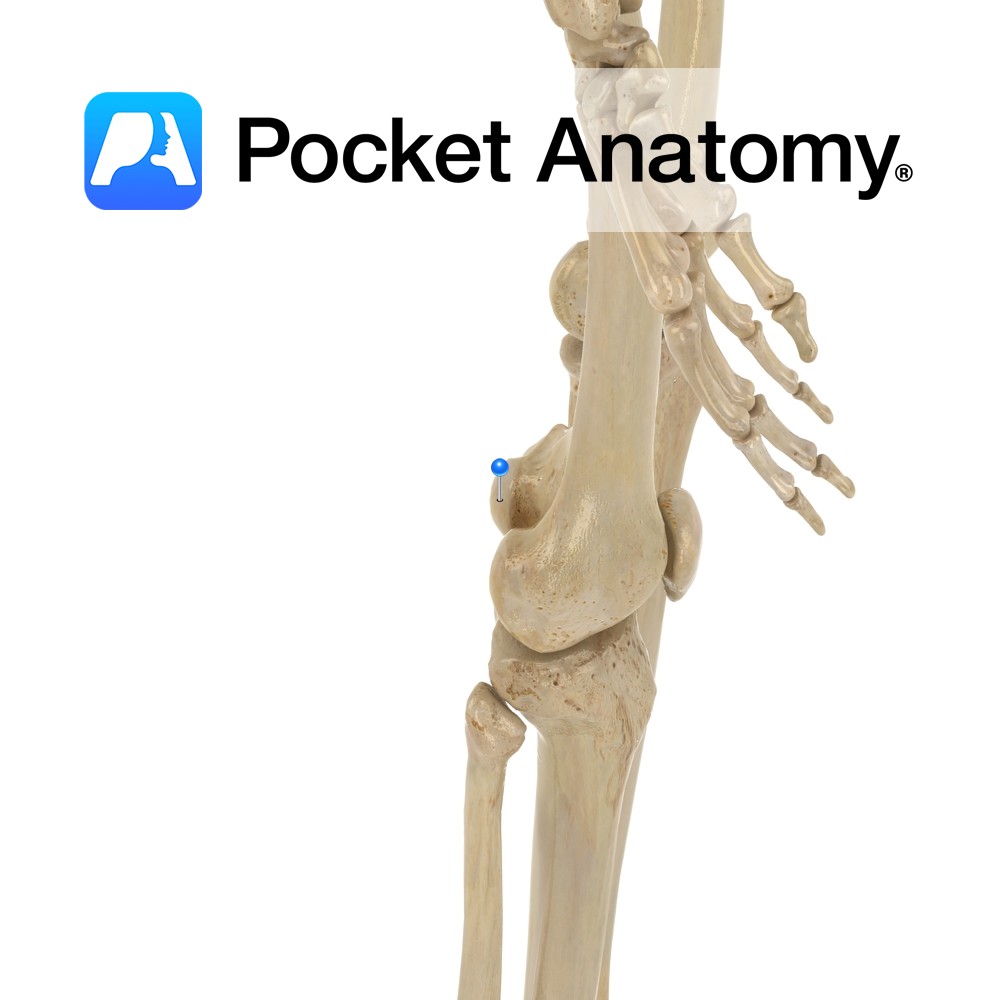
Anatomy Oblong eminence at medial/inner aspect of lower femur. Separated from lateral condyle in front by patellar space (trochlear groove), at back by intercondyloid fossa. Articulates at front with patella, bottom and back with tibia. Clinical Cartilage tears (osteochondral fractures) can occur in particular in the knee (medial condyle more than lateral, often as part
- Published in Pocket Anatomy Pins
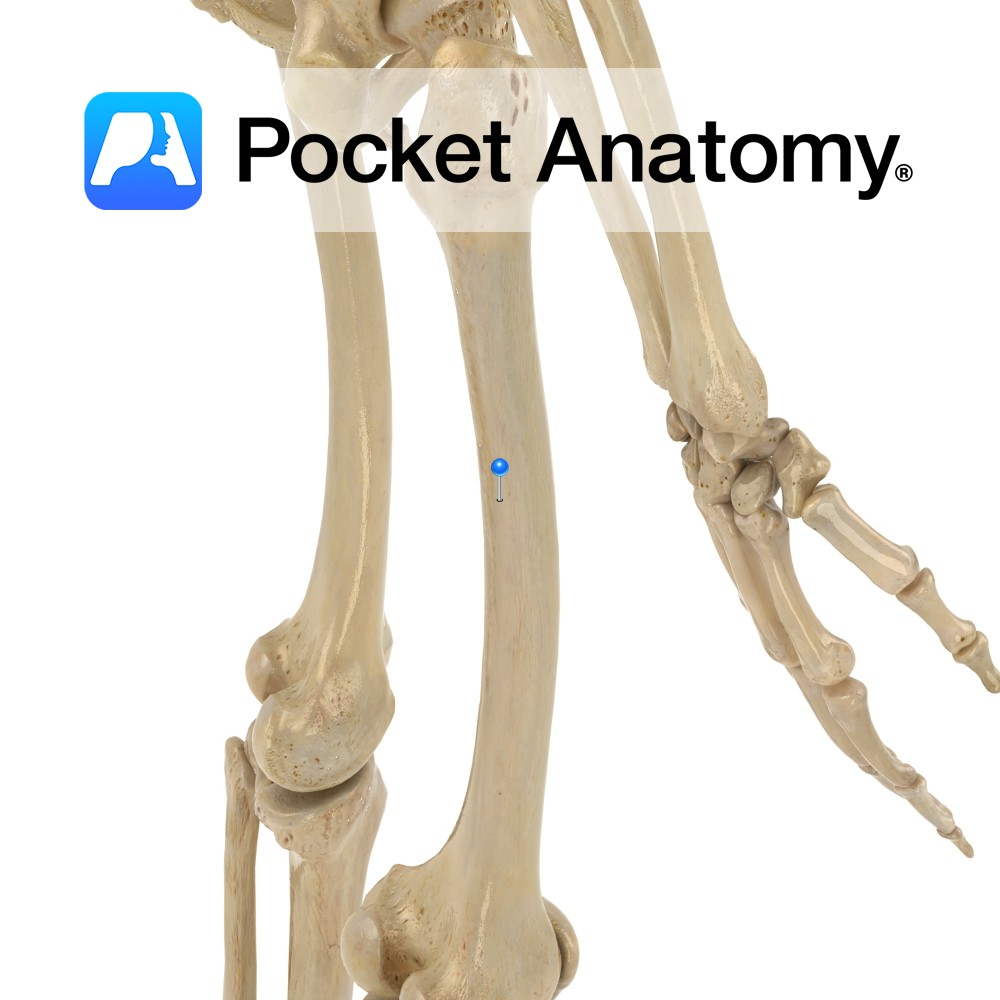
Anatomy Longitudinal ridge/crest at back of shaft. Many muscles attach: Medial lip and its extensions up and down – vastus medialis; lateral lip and its extension up – vastus lateralis; intermediate line, lateral extension above and medial extension below – adductor magnus; between vastus lateralis and adductor magnus – gluteus maximus above, short head biceps
- Published in Pocket Anatomy Pins
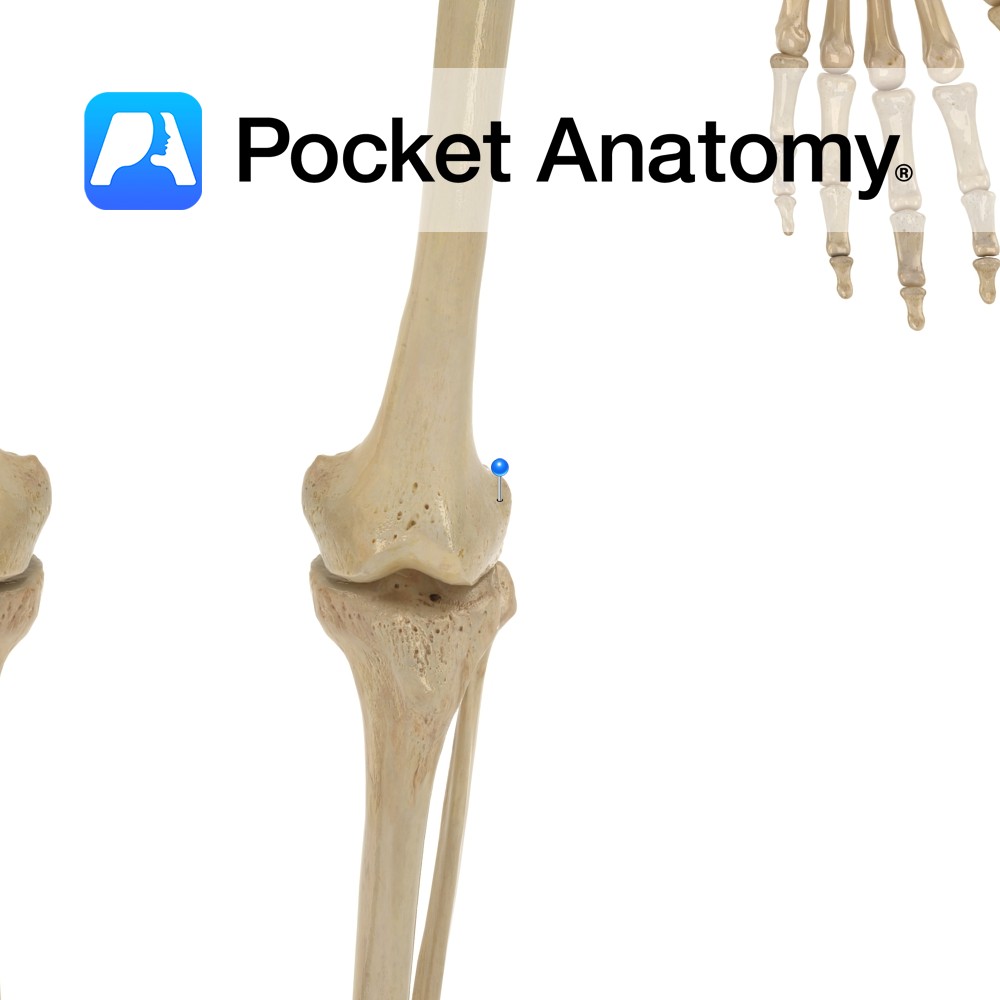
Anatomy Convex eminence at lateral aspect of lower end of femur; fibular (lateral) collateral ligament (LCL) attached, running down to head of fibula. Clinical 4 major knee ligaments; MCL (medial/tibial collateral ligament, medial epicondyle femur to medial condyle tibia), LCL (lateral/fibular epicondyle femur to head fibula), ACL (anterior cruciate ligament, from inside of lateral femoral
- Published in Pocket Anatomy Pins
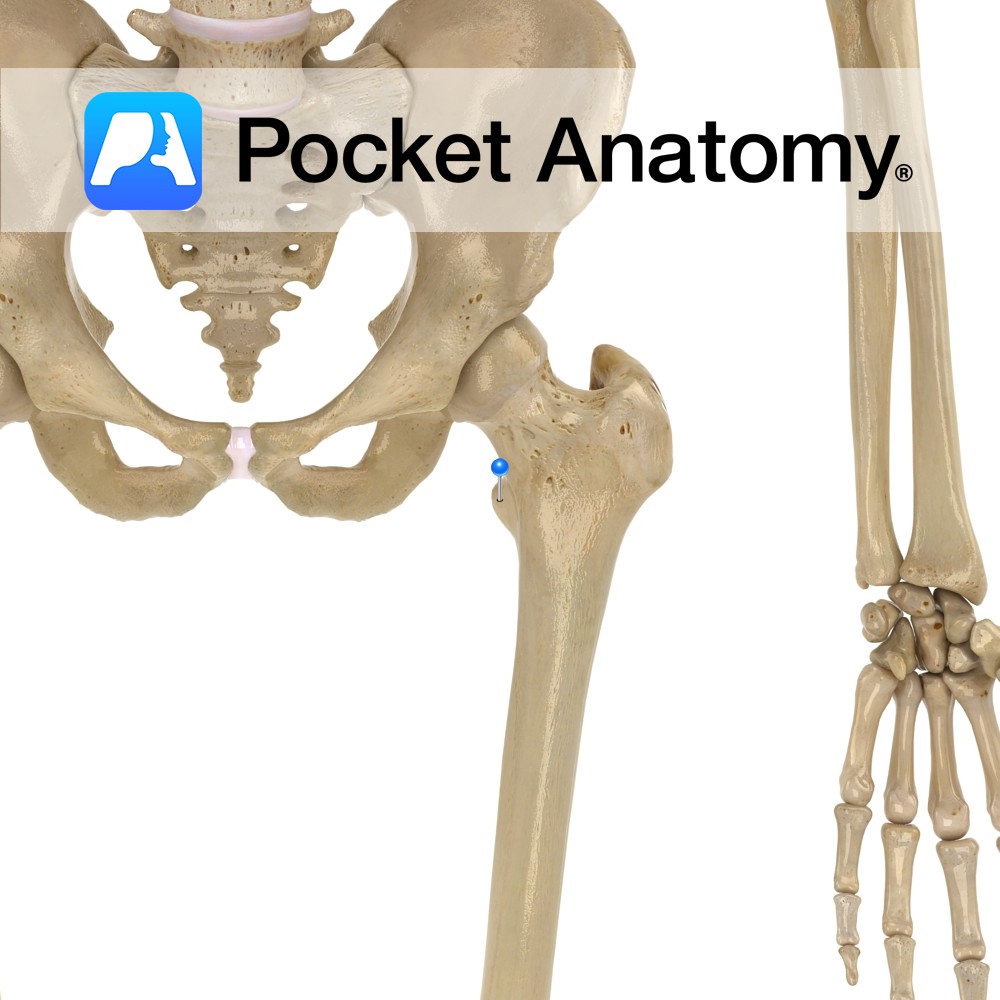
Anatomy Small bulge back from lower part of neck of femur, attachment tendon psoas major. Clinical Isolated fracture rare; ordinarily associated with intertrochanteric fracture. Vignette Trochanter; from the Greek for runner. Interested in taking our award-winning Pocket Anatomy app for a test drive?
- Published in Pocket Anatomy Pins
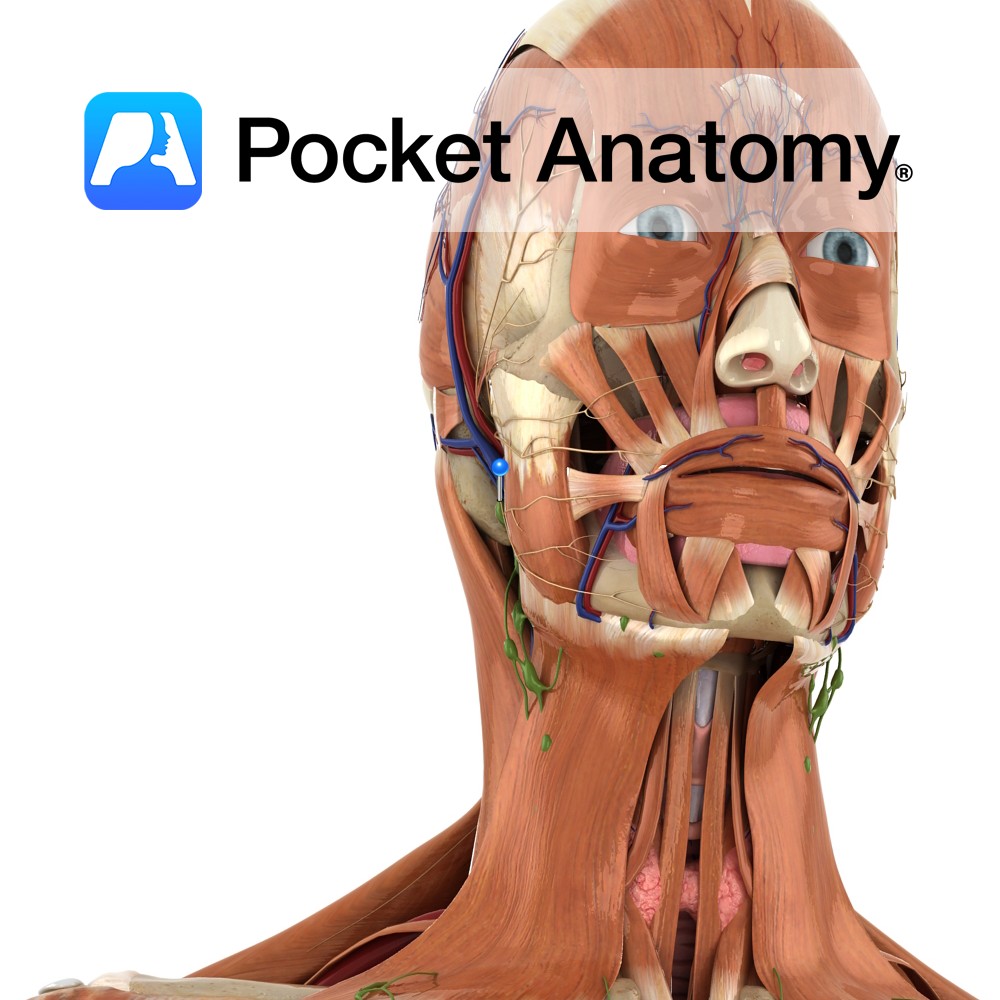
Anatomy Course Also known as the seventh cranial nerve. Has a motor and sensory origin that join together to form the nerve. It passes through the internal auditory meatus through the facial canal and finally exits from the stylomastoid foramen, and into the parotid gland where it divides into its terminal branches (temporal, zygomatic, buccal,
- Published in Pocket Anatomy Pins
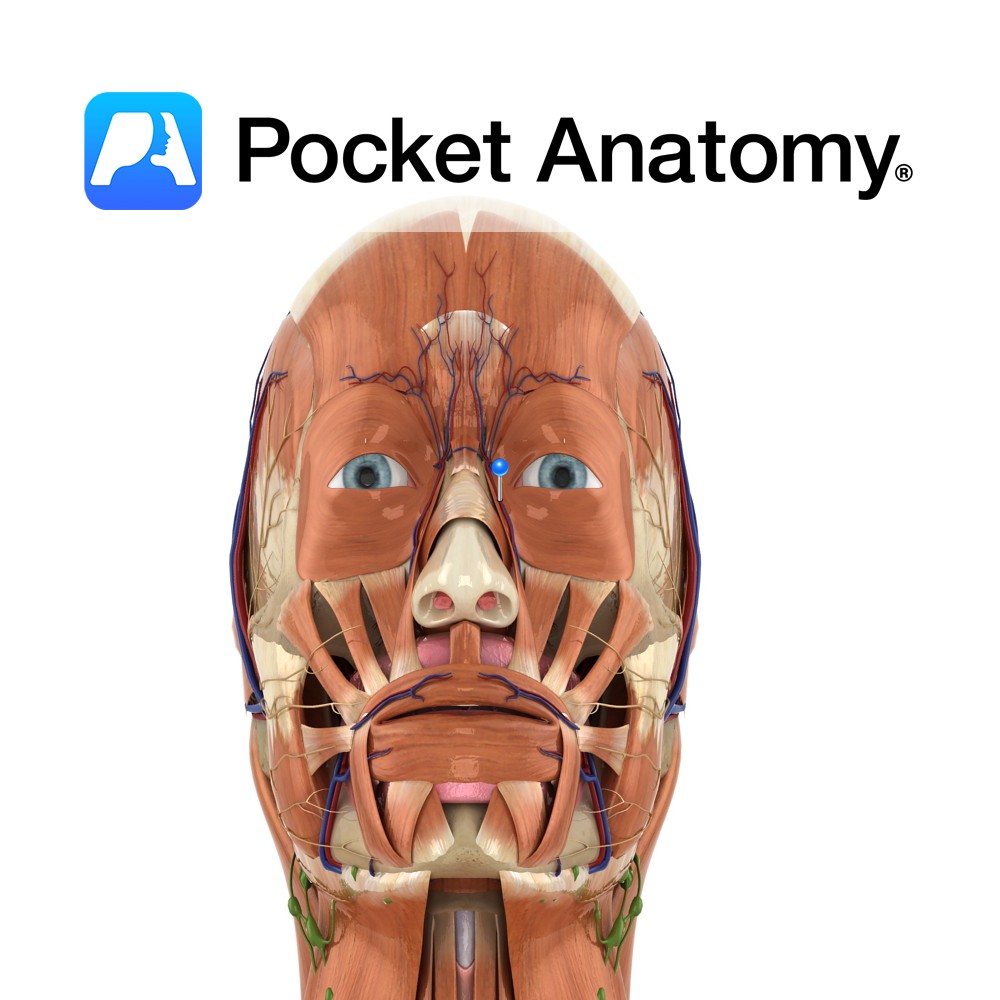
Anatomy Course Continuation of the angular vein at the base of the nose. It travels with the facial artery, but is considerably less tortuous. It can either empty directly into internal jugular vein or it can join with the retromandibular vein to form the common facial vein. Drain Drains the superficial veins of the face.
- Published in Pocket Anatomy Pins
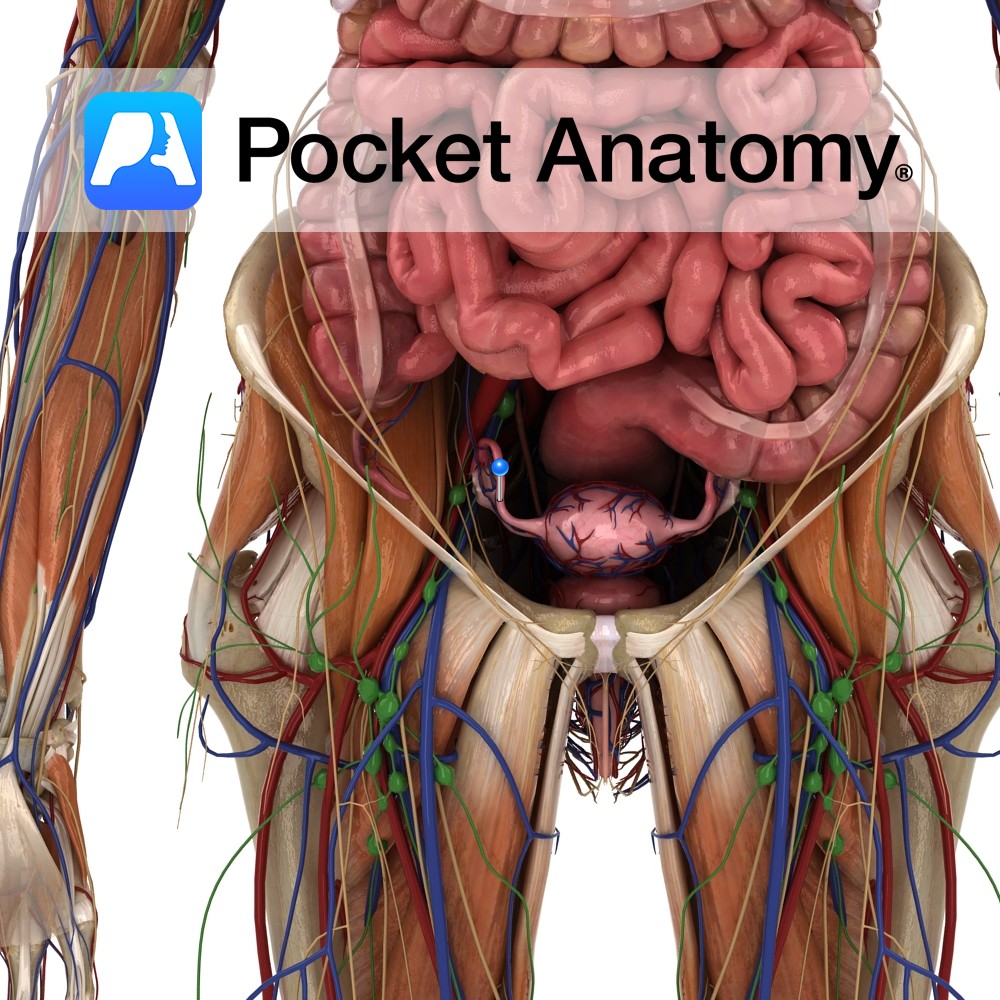
Anatomy Paired narrow muscular tubes (also known as uterine tubes, oviducts, salpinges), continuous with uterus medially, expanded laterally to envelop/overlay much of the ovary. Lateral to medial sections; wide infundibulum with fimbriae and ostium, ampulla, isthmus, intramural/interstitial part, uterotubal junction with ostium. The ends of the fallopian tube are termed ostia. The pinhead-sized proximal/medial/inner ostium
- Published in Pocket Anatomy Pins
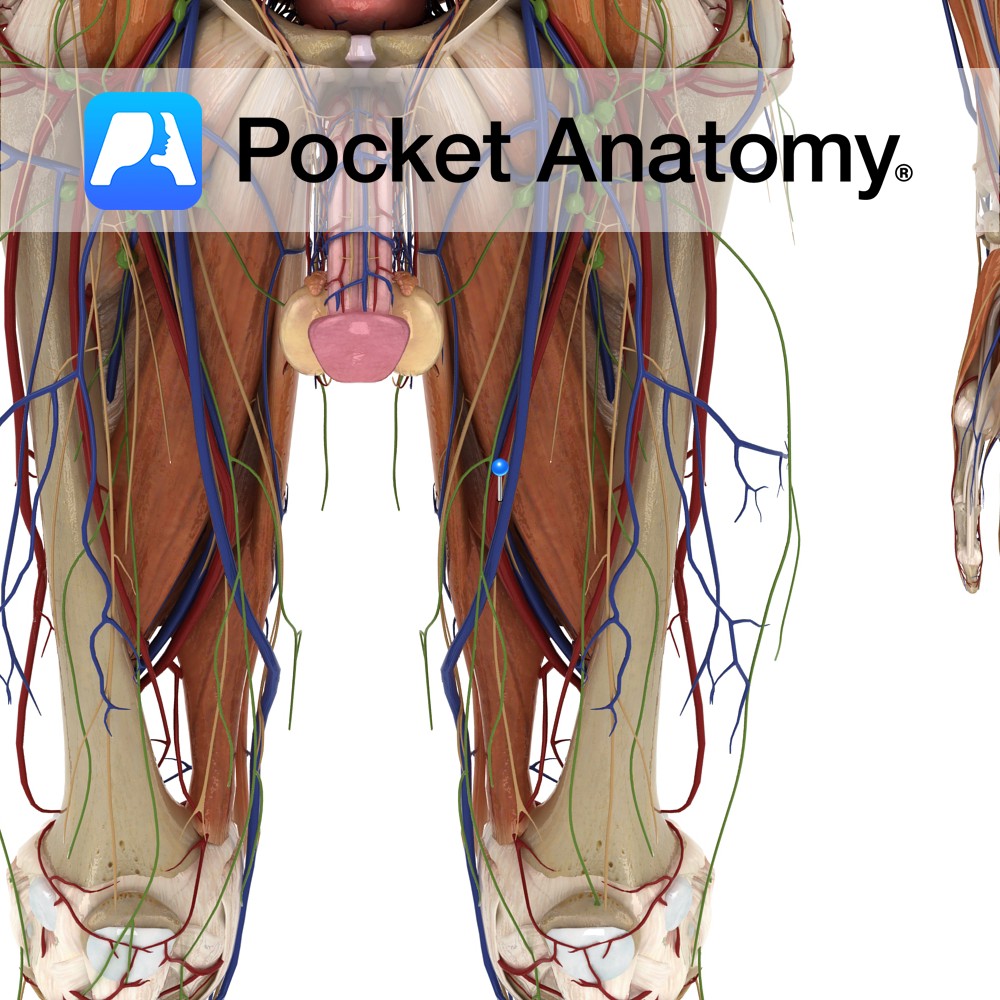
Anatomy Course The external iliac artery becomes the femoral artery as it passes below the inguinal ligament and enters the femoral triangle, where it then descends in the adductor canal. It eventually exits via the adductor hiatus of the adductor magnus muscle, where it becomes the popliteal artery. Supply Supplies cutaneous regions of the lower
- Published in Pocket Anatomy Pins