
PocketAnatomy® is a registered brand name owned by © eMedia Interactive Ltd, 2009-2027.
iPhone, iPad, iPad Pro and Mac are trademarks of Apple Inc., registered in the U.S. and other countries. App Store is a service mark of Apple Inc.

Anatomy Course Branch of the inferior mesenteric artery, which travels retroperitoneally and divides into ascending and descending branches. Supply Supplies the descending and transverse colon. Interested in taking our award-winning Pocket Anatomy app for a test drive?
- Published in Pocket Anatomy Pins

Anatomy Course Branch of either the superior mesenteric artery or the ileocolic artery (inconsistent). Along its path it crosses anteriorly to the gonadal vessels, right ureters and the psoas major muscle. Supply Supplies both the ascending and transverse colon. Interested in taking our award-winning Pocket Anatomy app for a test drive?
- Published in Pocket Anatomy Pins
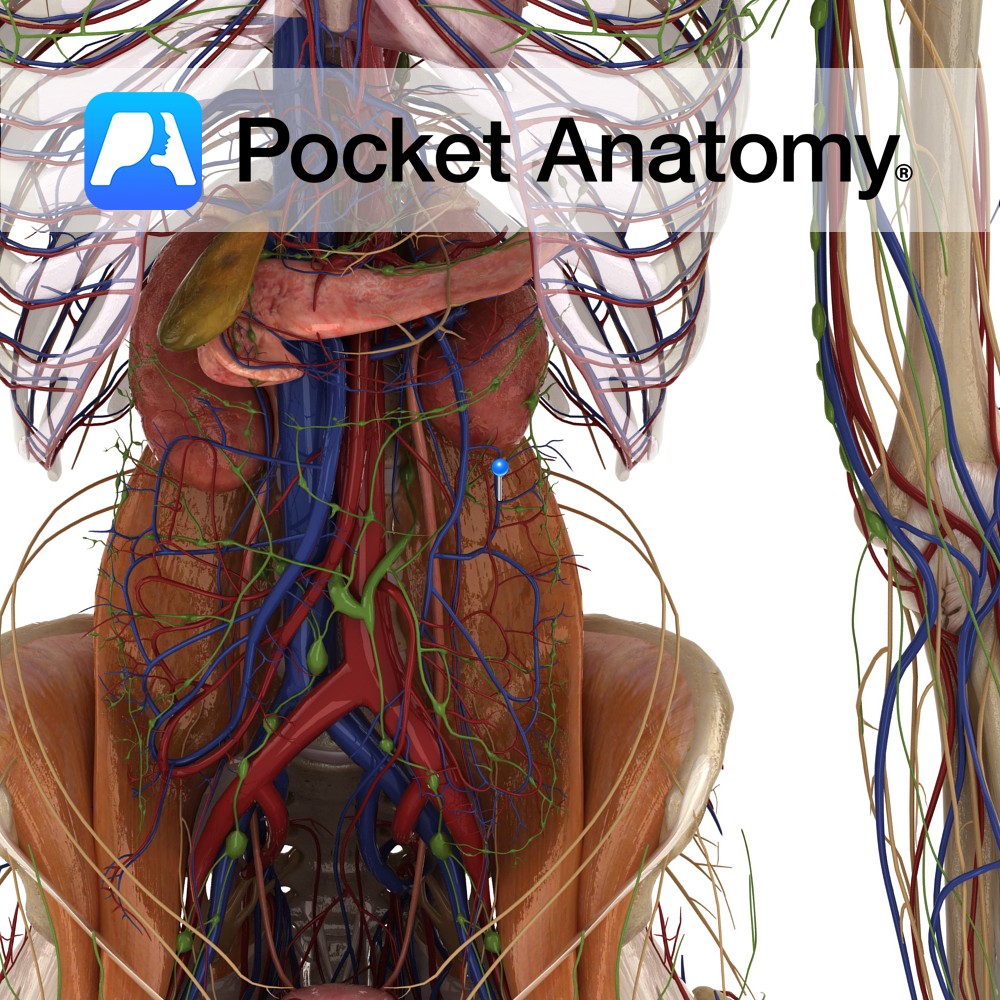
Anatomy Course All the colic veins follow their corresponding arteries and eventually empty into the superior and inferior mesenteric veins. Drain Left colic drains the descending colon, the right colic drains the ascending colon and the middle colic drains the transverse colon. Interested in taking our award-winning Pocket Anatomy app for a test drive?
- Published in Pocket Anatomy Pins
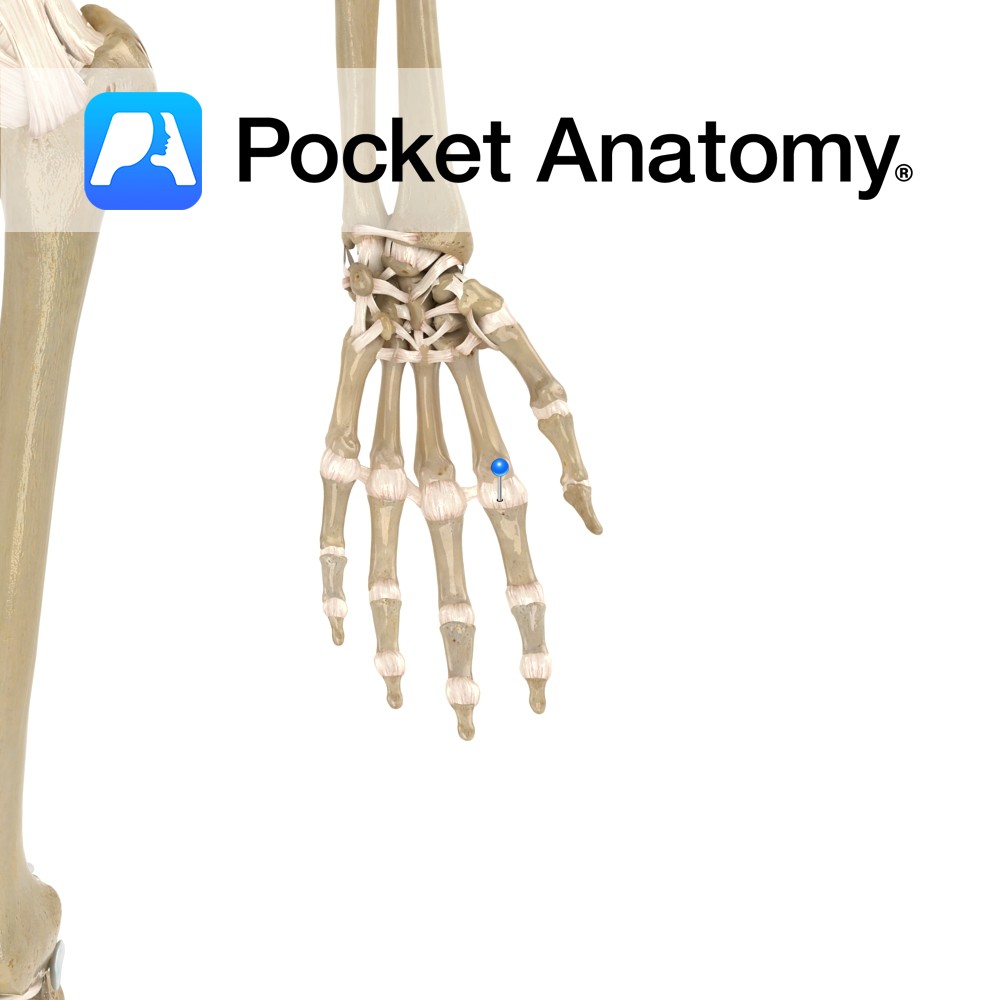
Anatomy The metacarpophalangeal ligaments attach from the distal heads of metacarpals two to five on the radial and ulnar surfaces, then attaching to the base of the corresponding phalangeals. Functions To reinforce laterally the metacarpophalangeal joint. Interested in taking our award-winning Pocket Anatomy app for a test drive?
- Published in Pocket Anatomy Pins
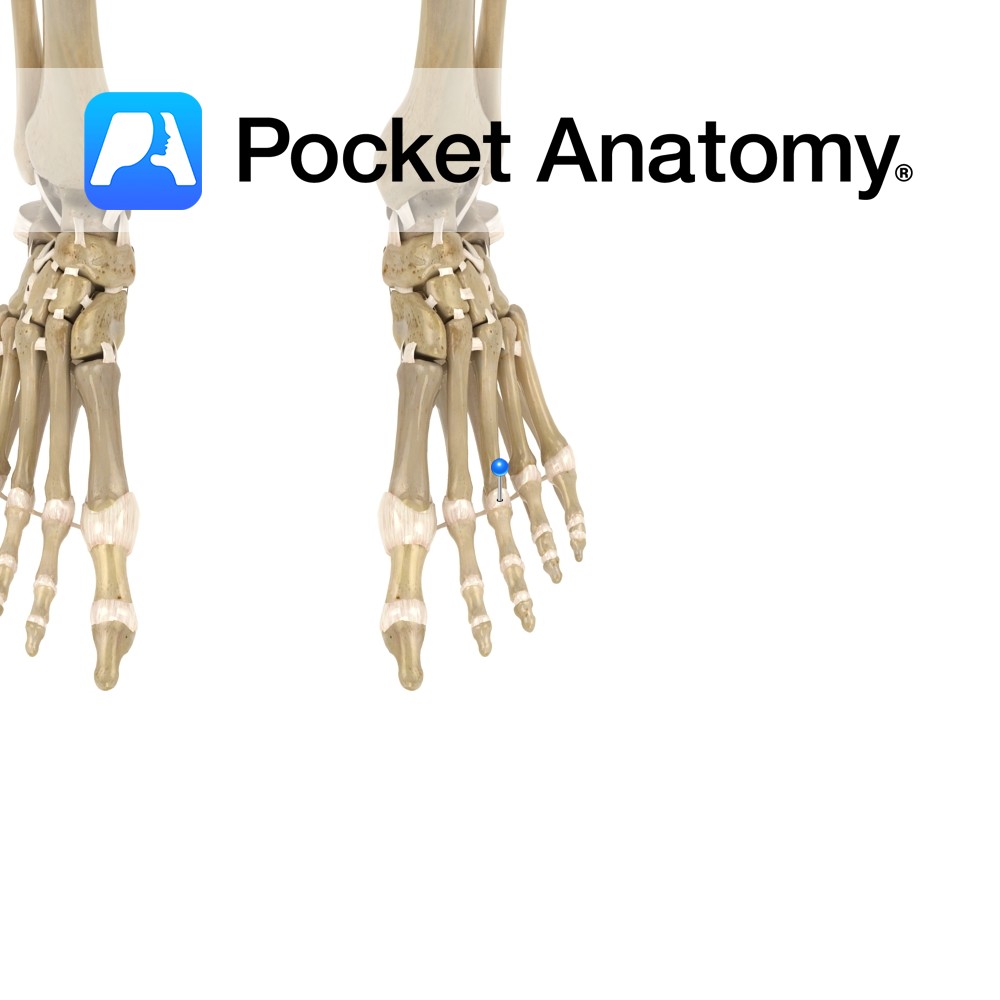
Anatomy Attach from the lateral and medial sides of the heads of the metatarsals to the base of the corresponding phalangeal joints. Functions To reinforce the joint laterally and medially. Interested in taking our award-winning Pocket Anatomy app for a test drive?
- Published in Pocket Anatomy Pins
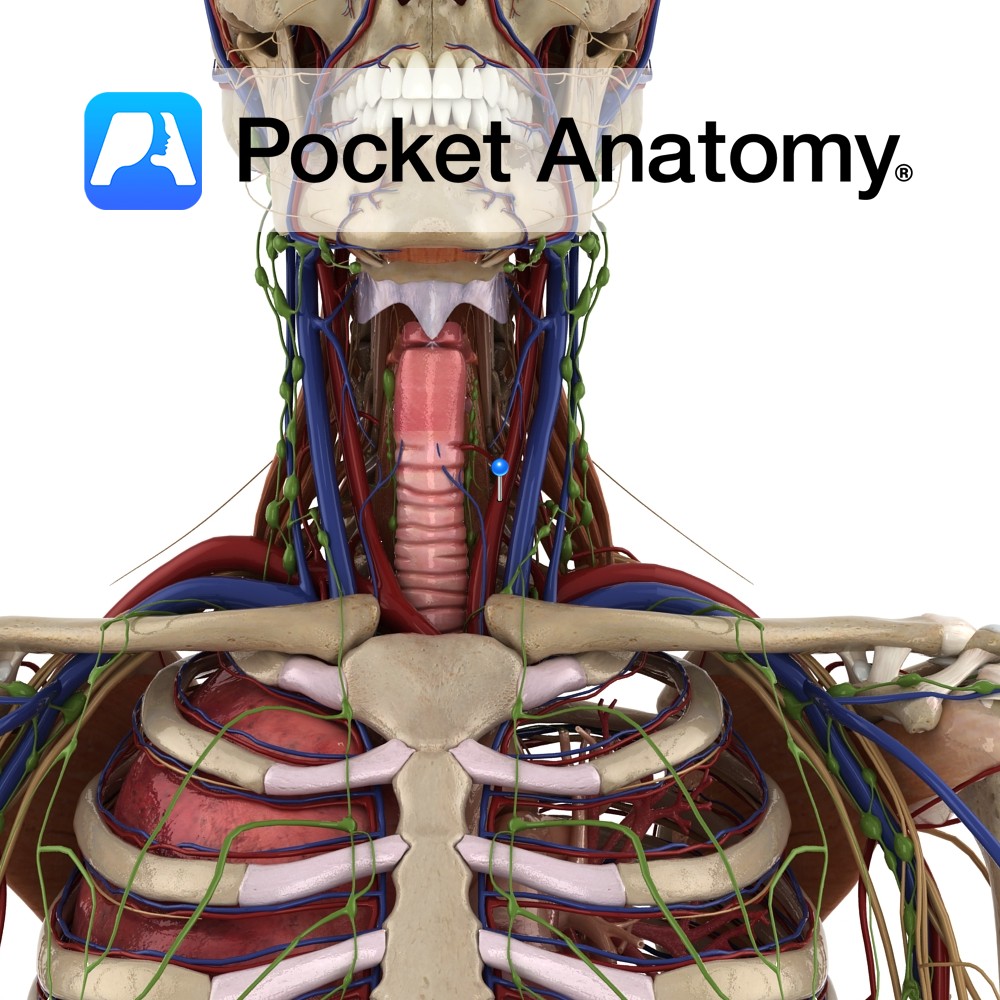
Anatomy Course Right common carotid artery originates from the right brachiocephalic trunk posterior to the sternoclavicular joint. Left common carotid originates as a main branch of the arch of the aorta and ascends to enter the neck behind the left sternoclavicular joint. Both bifurcate into the internal and external carotid arteries in the carotid triangle.
- Published in Pocket Anatomy Pins
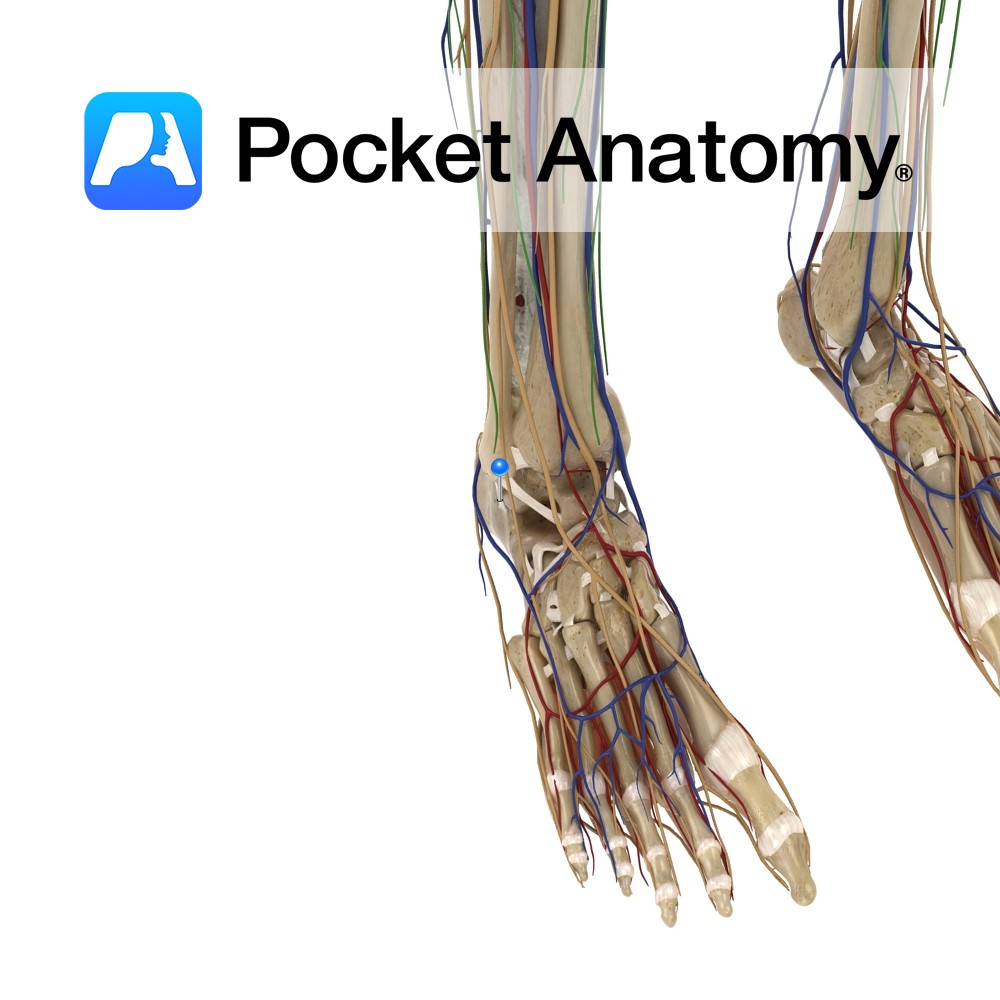
Anatomy Attaches from the posteromedial side of the lateral malleolus, above the malleolus fossa. It travels obliquely downwards and posteriorly to attach to a tubercle on the lateral surface of the calcaneus. Functions Supplies support and stability to the talocural (ankle) joint. Clinical The lateral ligaments of the ankle are the most commonly strained. The
- Published in Pocket Anatomy Pins
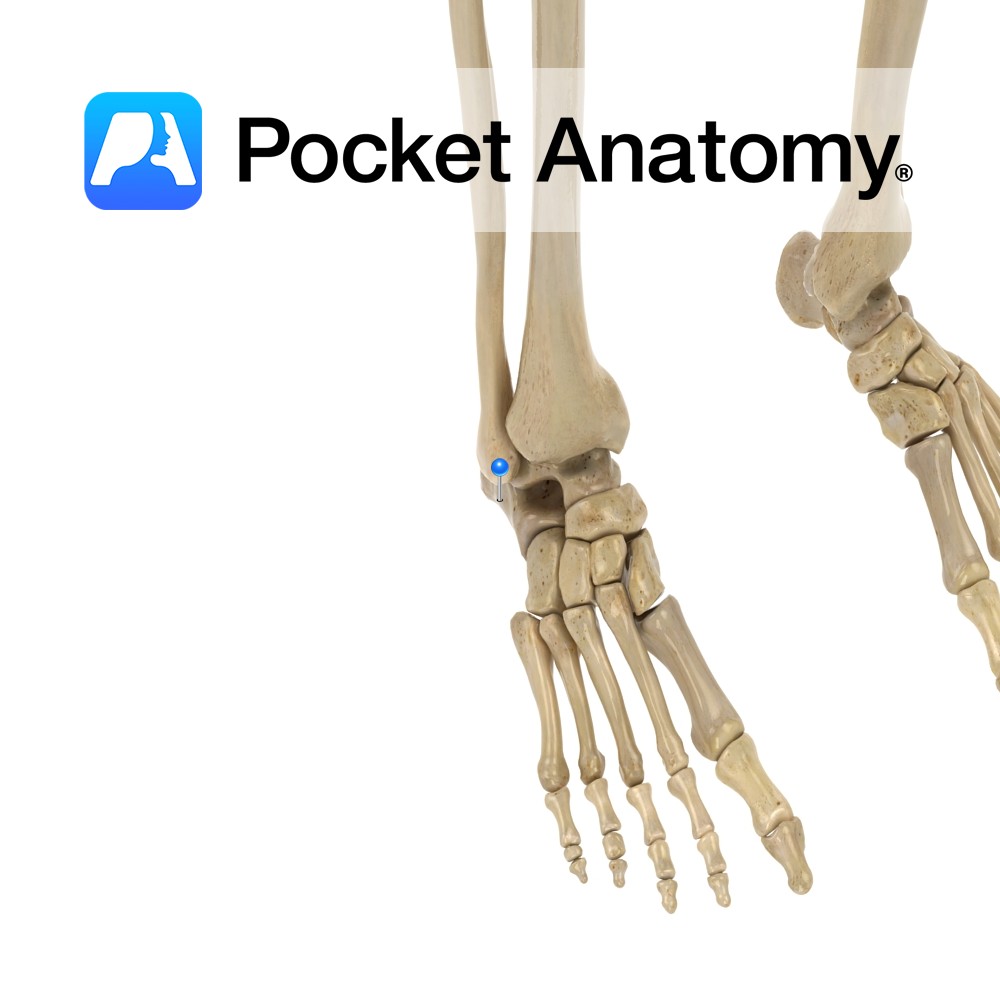
Anatomy Heelbone. Largest tarsal bone, bears most weight in heel. Biggest tendon in body – Achilles – inserts into upper surface. Talus + calcaneus = hindfoot. Articulates up with talus, forward with cuboid. Clinical Joint above (subtalar) affords foot inversion and eversion and in conjunction with calcaneocuboid and talonavicular joints below (together called transverse talar
- Published in Pocket Anatomy Pins
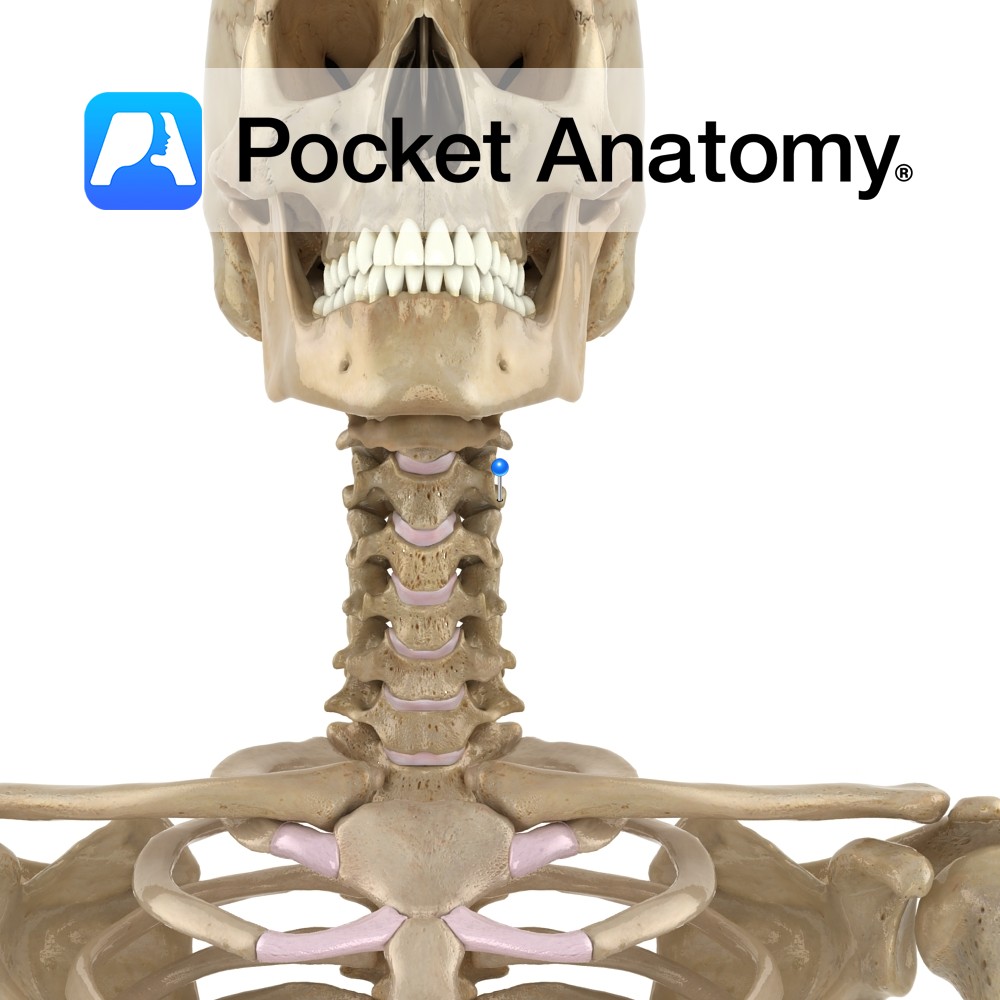
Anatomy Pedicles project posteriorly from either side of the back of the vertebral body, joining laminae which themselves meet at the midline (from where a spinous process projects back and down) to complete the neural arch (enclosing the vertebral foramen). Where pedicle meets lamina each side, a transverse process, to which muscles and ligaments attach,
- Published in Pocket Anatomy Pins
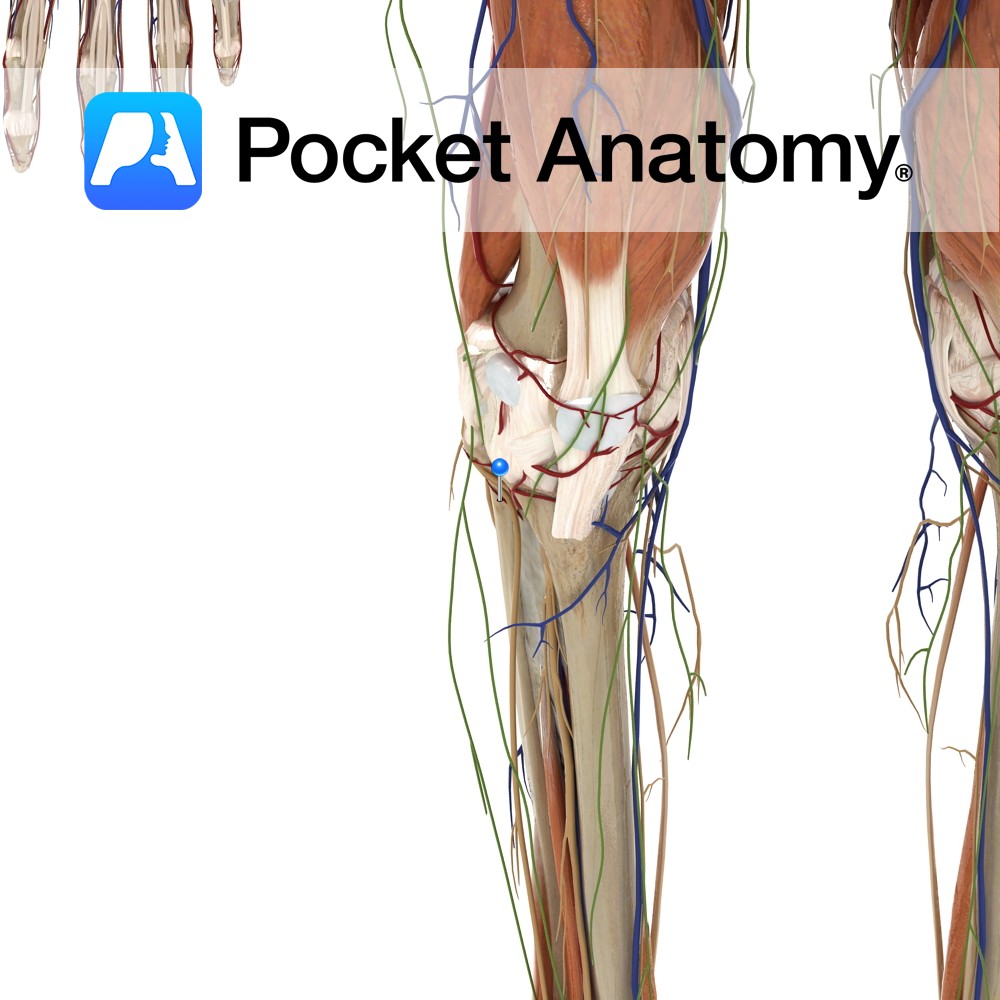
Anatomy Course Branch of the anterior tibial artery. Travels laterally through the soleus muscle as well as continuing around the neck of the fibula. It ends by contributing to the anastomotic network of the knee. Supply Supplies the soleus muscle and other adjacent muscles. Interested in taking our award-winning Pocket Anatomy app for a test
- Published in Pocket Anatomy Pins