
PocketAnatomy® is a registered brand name owned by © eMedia Interactive Ltd, 2009-2027.
iPhone, iPad, iPad Pro and Mac are trademarks of Apple Inc., registered in the U.S. and other countries. App Store is a service mark of Apple Inc.
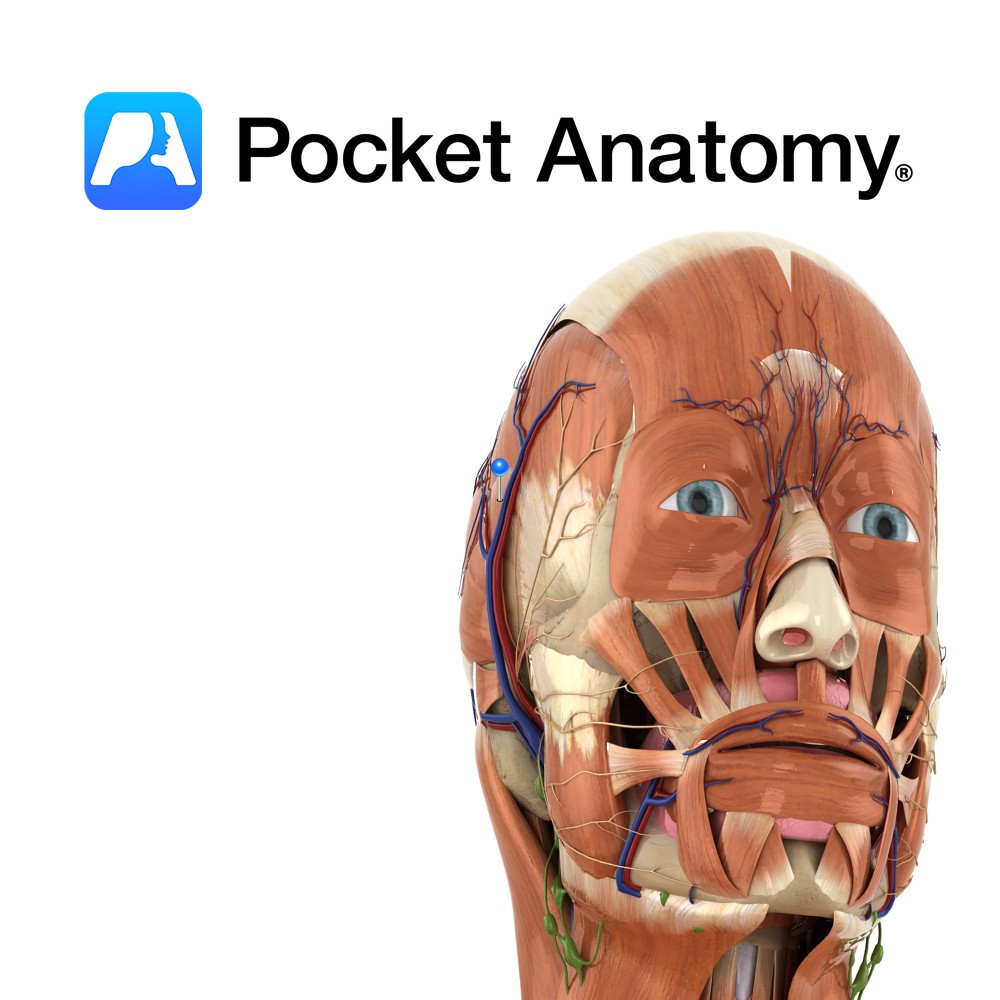
Anatomy Origin: Epicranial aponeurosis on the lateral aspect of the head. Insertion: Upper part of the auricle. Key Relations: Lies superior to the ear on the lateral surface of the head. Functions Elevates the ear. Supply Nerve Supply: Facial nerve (CN 7) Blood Supply: Superficial temporal artery. Interested in taking our award-winning Pocket Anatomy app
- Published in Pocket Anatomy Pins
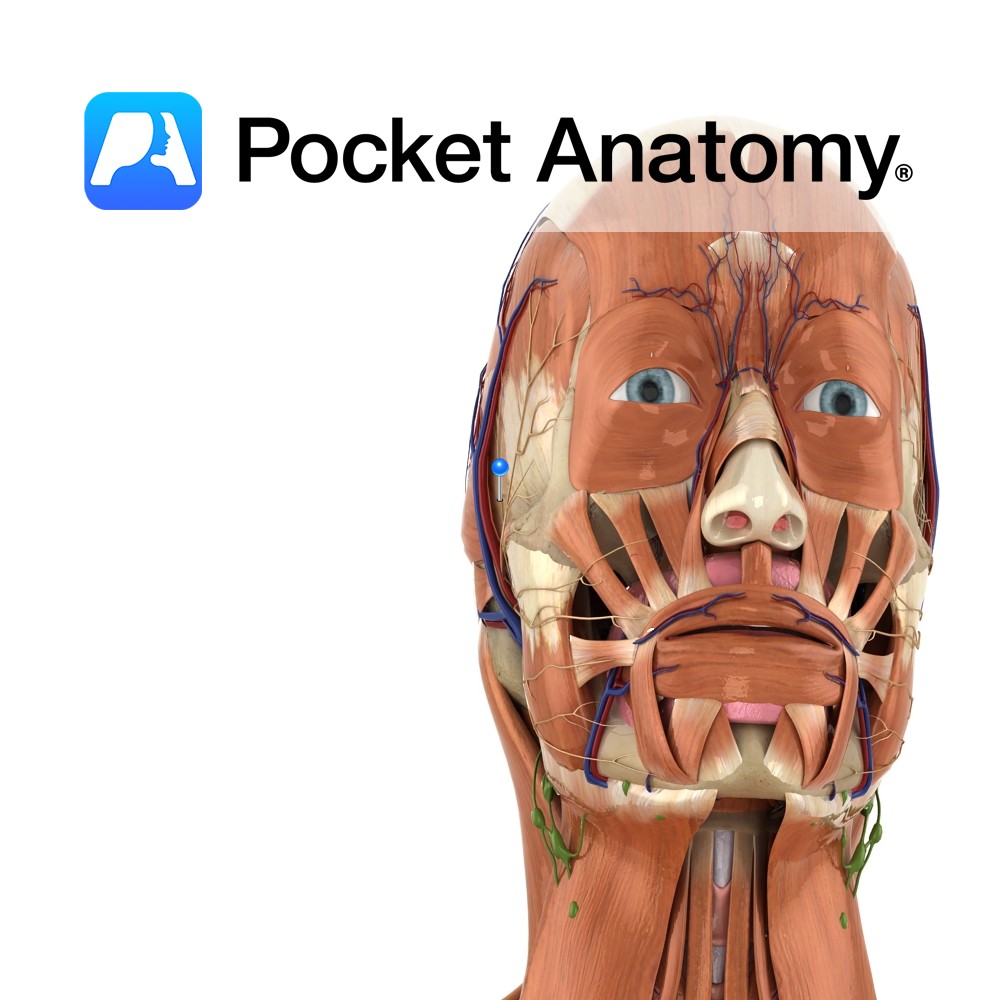
Anatomy Course Composed of two different roots of the mandibular nerve, which pass along both sides of the middle meningeal artery. It travels with the superficial temporal artery and vein to the neck of the mandible. It then travels anteriorly to cross the zygomatic process of temporal bone giving off branches along its route. Supply
- Published in Pocket Anatomy Pins
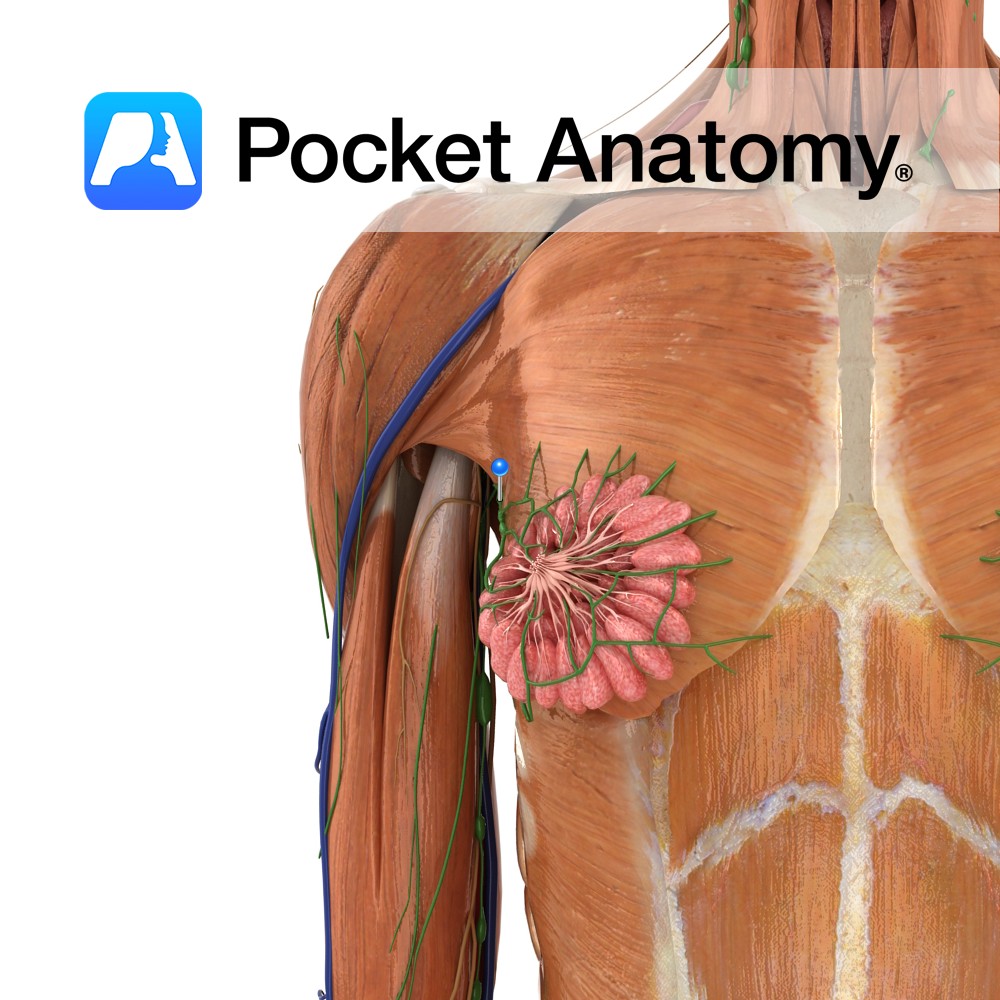
Anatomy Cluster/group of nodes, in armpit. Afferent vessels bring lymph from arm, thoracic walls, breast, upper parts of abdominal walls. Efferent vessels pass filtered lymph on via the Subclavian Trunk to the Lymphatic (Thoracic) Duct; R empties into the R Subclavian Vein, L into L Brachiocephalic (aka Innominate) Vein, each through semilunar valves (which prevent
- Published in Pocket Anatomy Pins
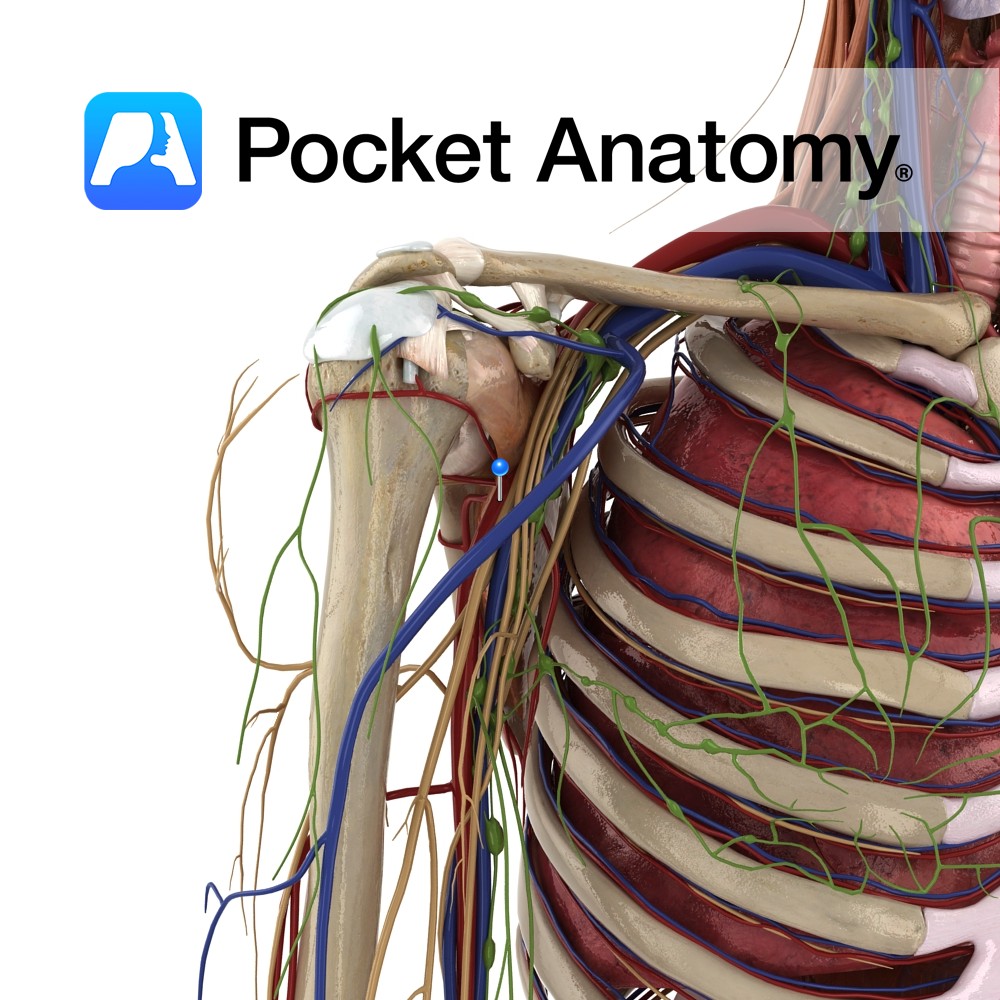
Anatomy Course Continuation of the subclavian artery after it passes the lateral margin of the first rib. It passes through the axillary inlet in association with the axillary vein, which is anterior to the artery. Separated into three parts by the pectoralis muscles. Supply Supplies the distal aspect of the arm. Clinical Fracture of the
- Published in Pocket Anatomy Pins
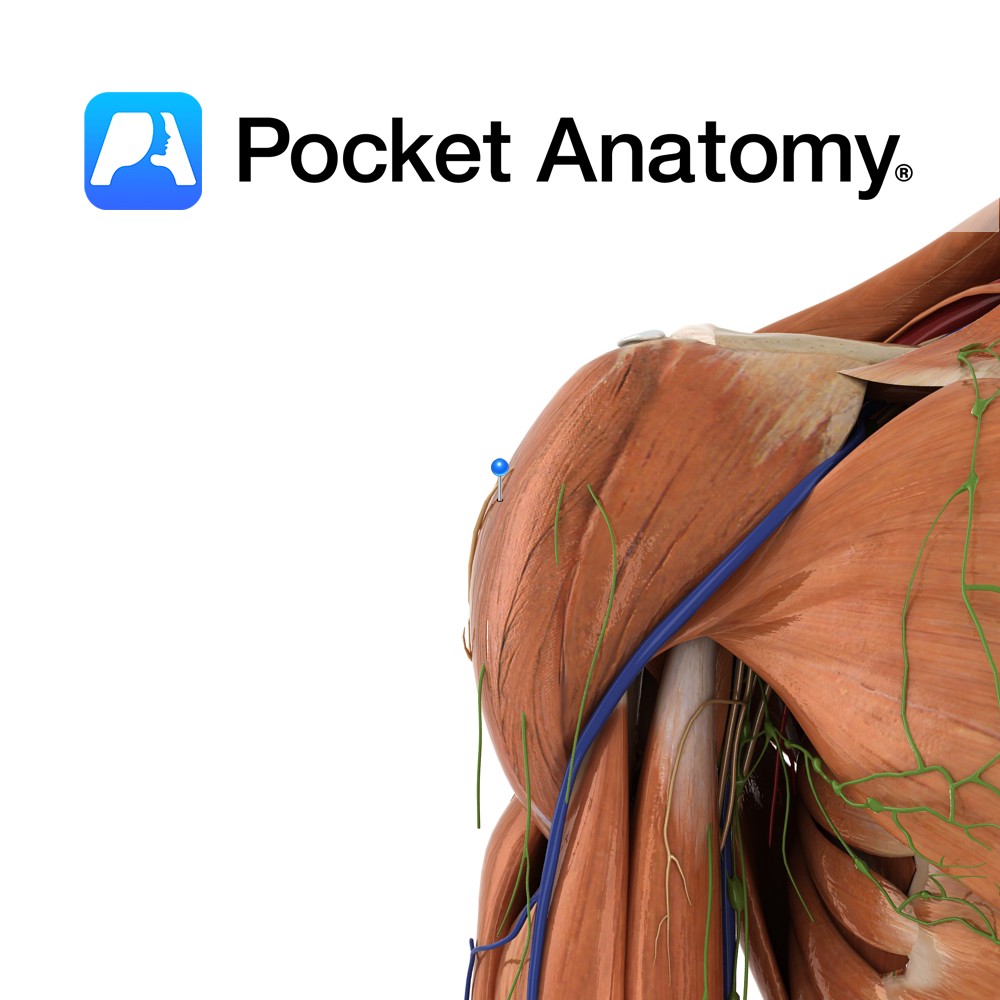
Anatomy The axillary nerve arises from the posterior cord of the brachial plexus and exits through the quadrangular space along with the anterior circumflex humeral artery and posterior circumflex humeral vein. Supply Supplies the deltoid, teres minor and triceps brachii (long head), as well as carrying sensory information from the skin covering the inferior region
- Published in Pocket Anatomy Pins
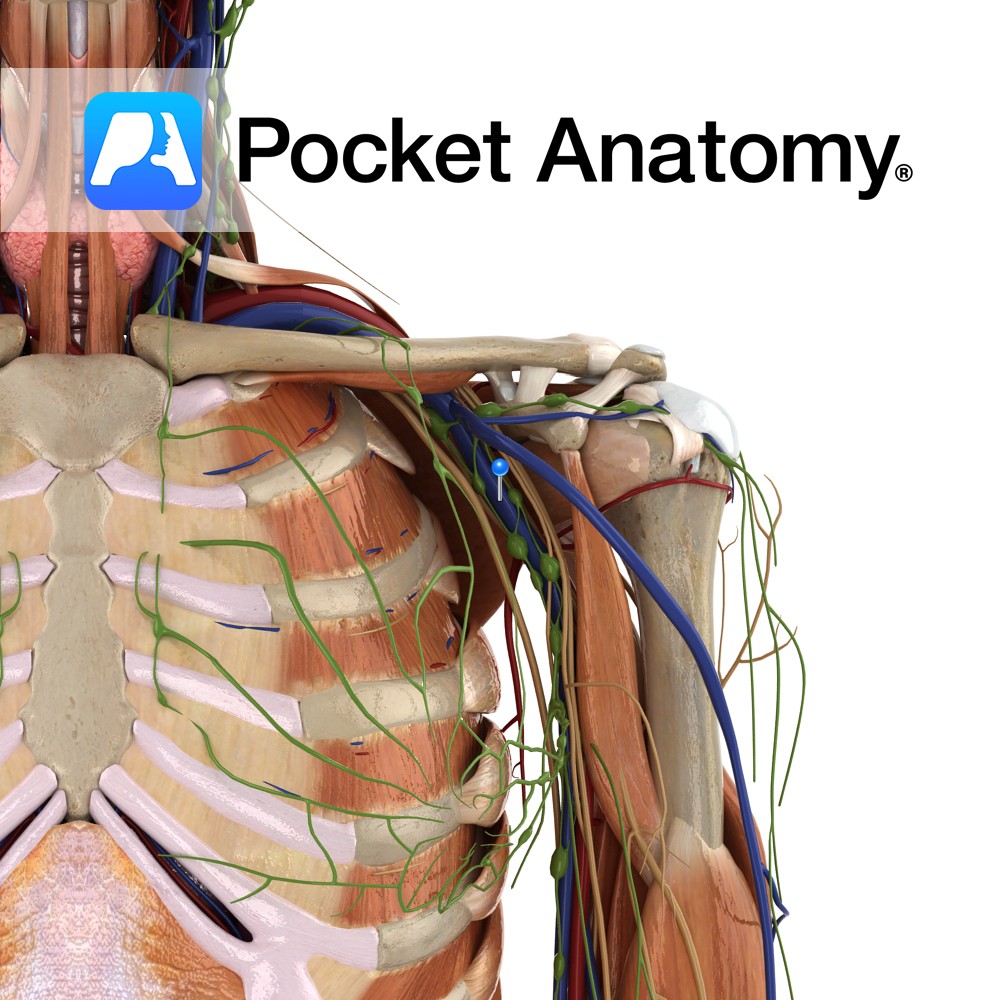
Anatomy Course Continuation of the brachial vein as it passes the teres major muscle. Along with its corresponding artery it travels through the axilla until it reaches the lateral aspect of the first rib, where it becomes the subclavian vein. Drain Receives superficial veins of the area such as the basilic and cephalic veins. Interested
- Published in Pocket Anatomy Pins
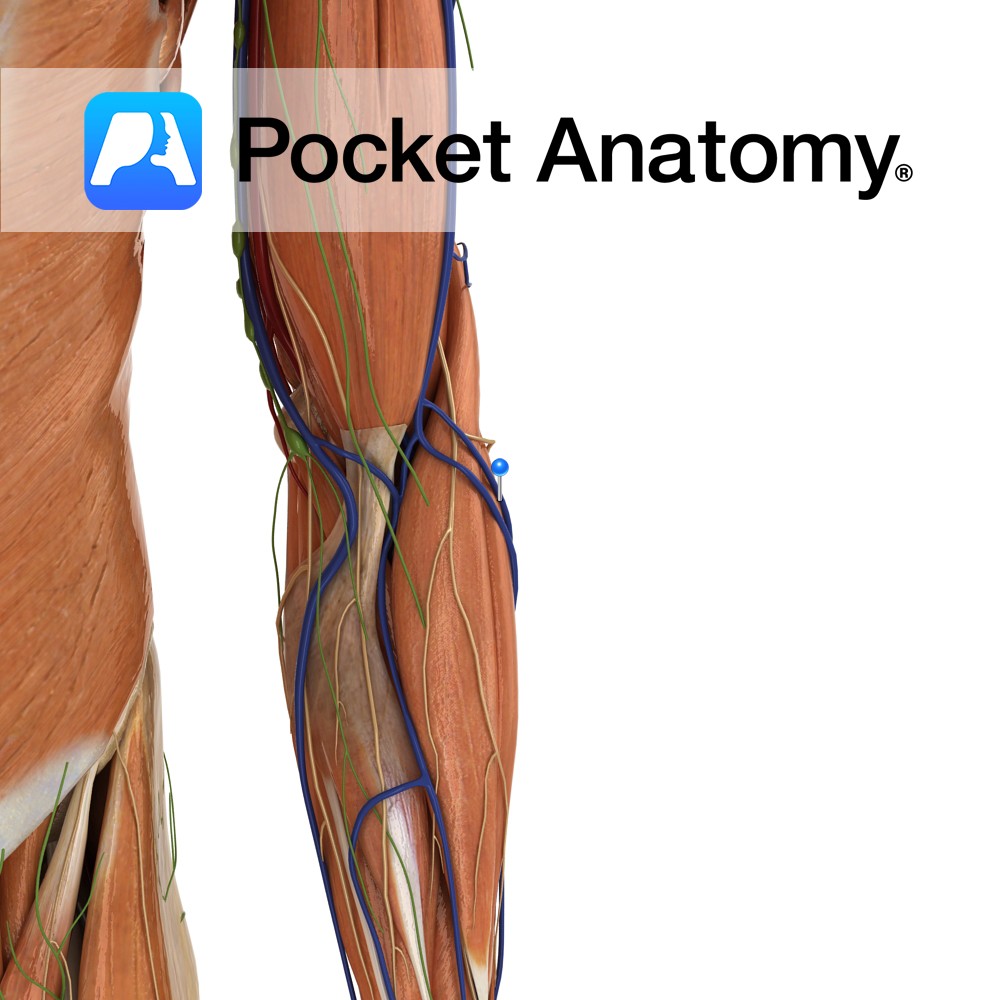
Anatomy Course Arises from a small plexus on the posterior forearm and rises on the lateral side until it joins the cephalic vein at the elbow. Drain Drains the posterior side of the forearm. Interested in taking our award-winning Pocket Anatomy app for a test drive?
- Published in Pocket Anatomy Pins
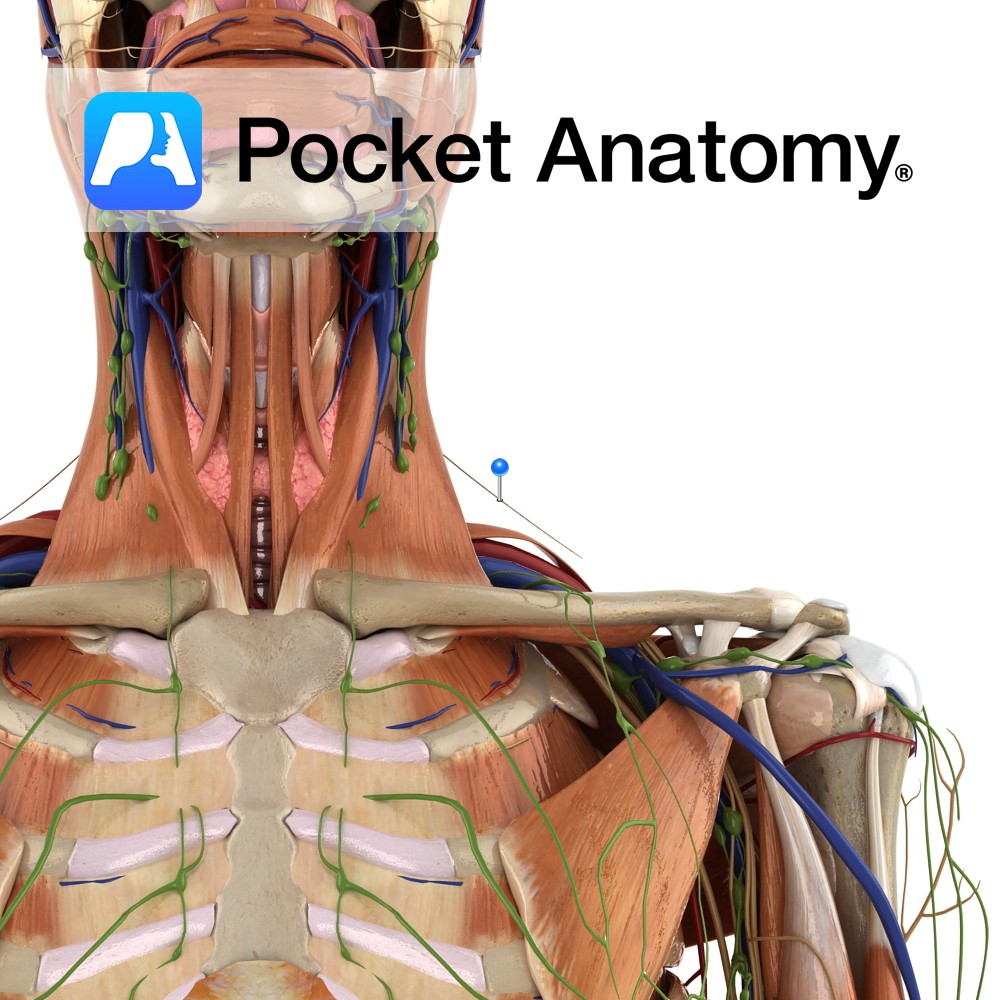
Anatomy Course Also known as the eleventh cranial nerve, its spinal root enters the cranium via the foramen magnum to join the cranial root, and it then exits via the jugular foramen along with the glossopharyngeal and vagus nerves. Once out of the cranium, the cranial portion of the nerve dissociates and joins the vagus
- Published in Pocket Anatomy Pins
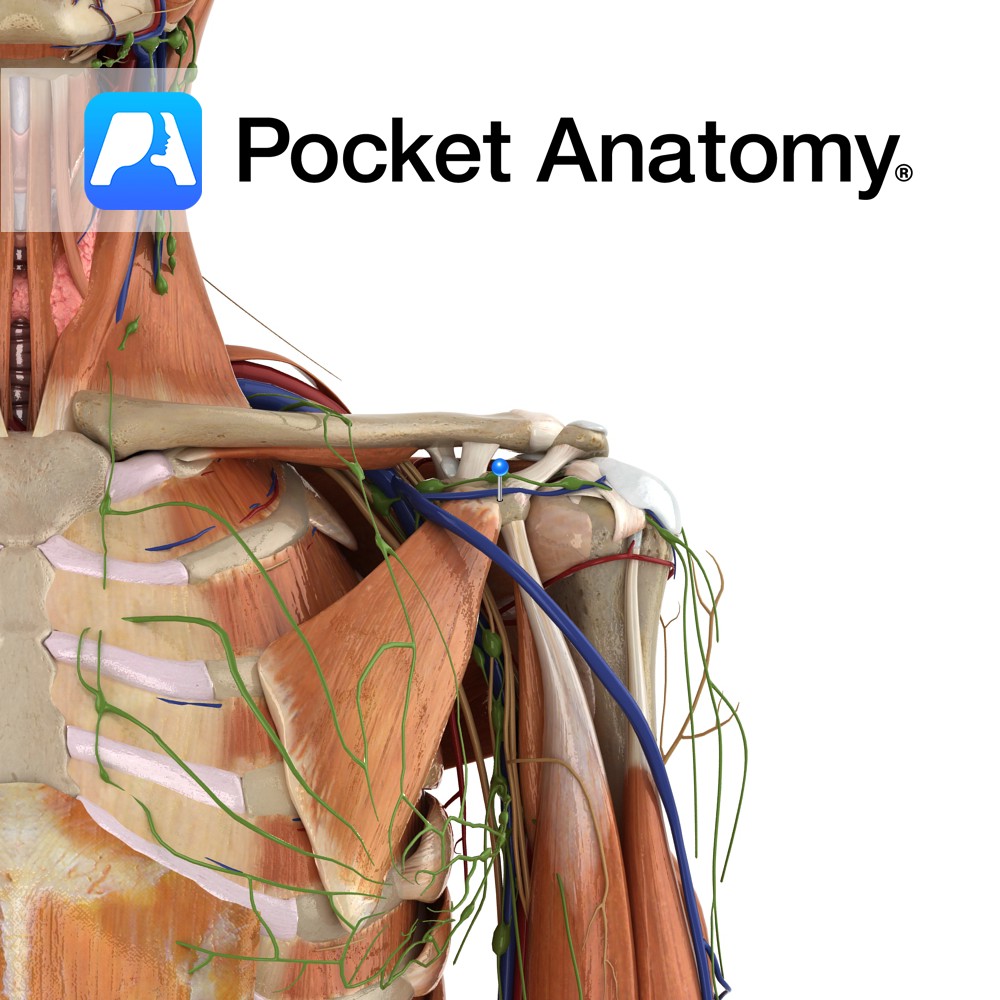
Anatomy Course Part of a network of veins that can be found in the shoulder. It follows a similar path to its corresponding artery. Drain Drains the scapular region of the back. Interested in taking our award-winning Pocket Anatomy app for a test drive?
- Published in Pocket Anatomy Pins
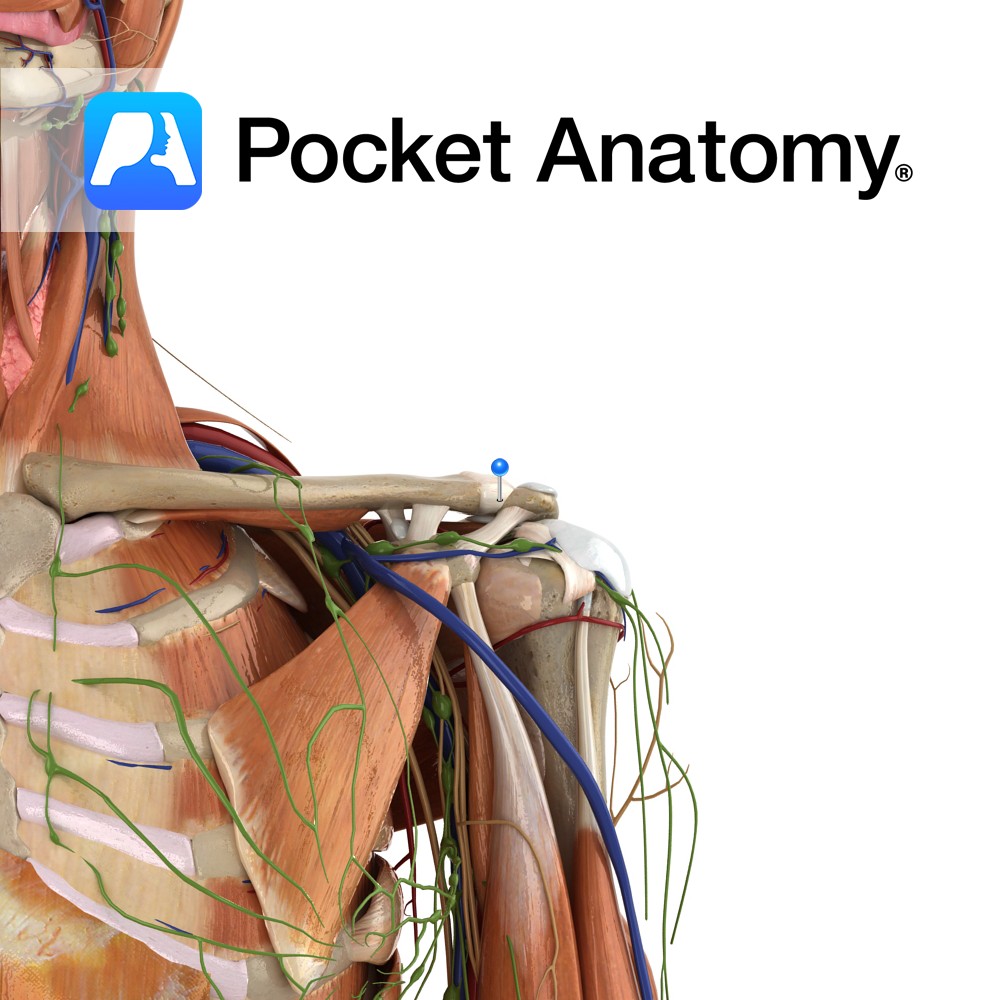
Anatomy The acromioclavicular ligament lies superiorly to the acromioclavicular joint. It is a thickening of the acromioclavicular capsular ligament. It attaches from the superior lateral end of the clavicle to the adjacent superior surface of the acromium. Functions Stabilises the acromioclavicular joint along with the coracoclavicular ligament. Clinical The acromioclavicular joint is a very unstable
- Published in Pocket Anatomy Pins